StripedLines

The StripedLines field guide · ME–NJ

Striped bass bait, month by month.

Seasonal reference · not live bait sightings.

Bait to look for

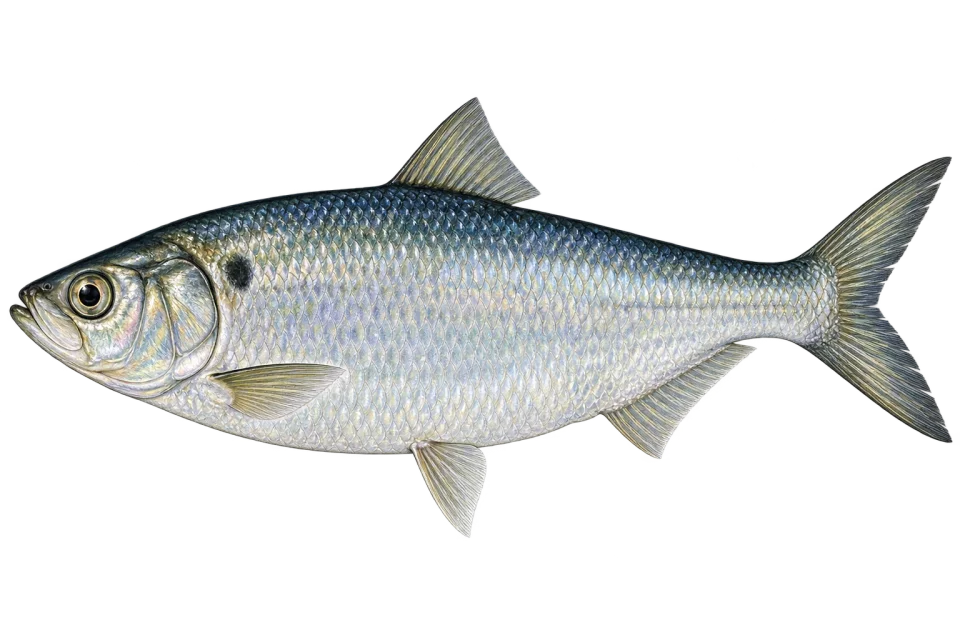
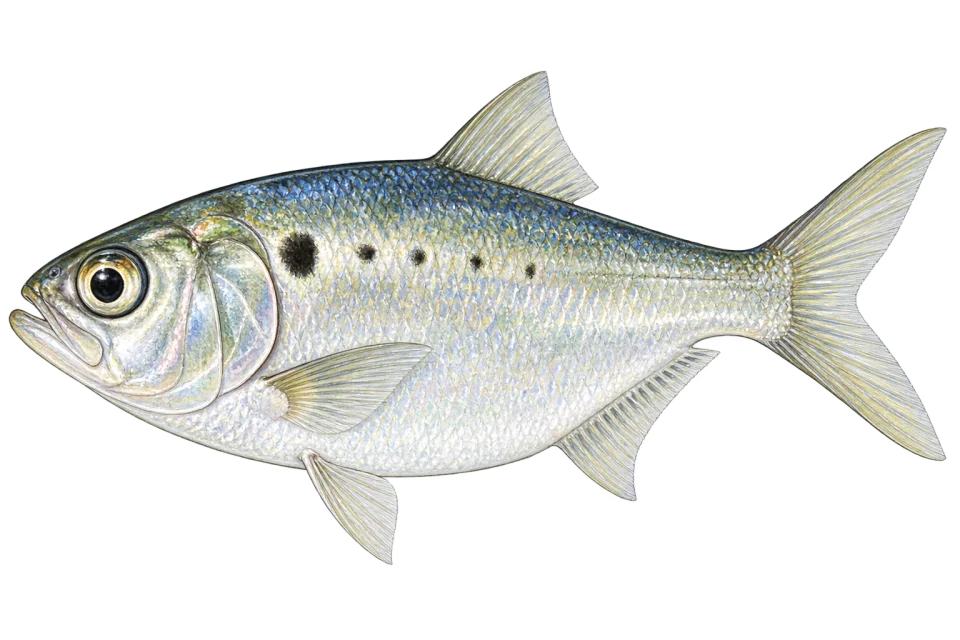
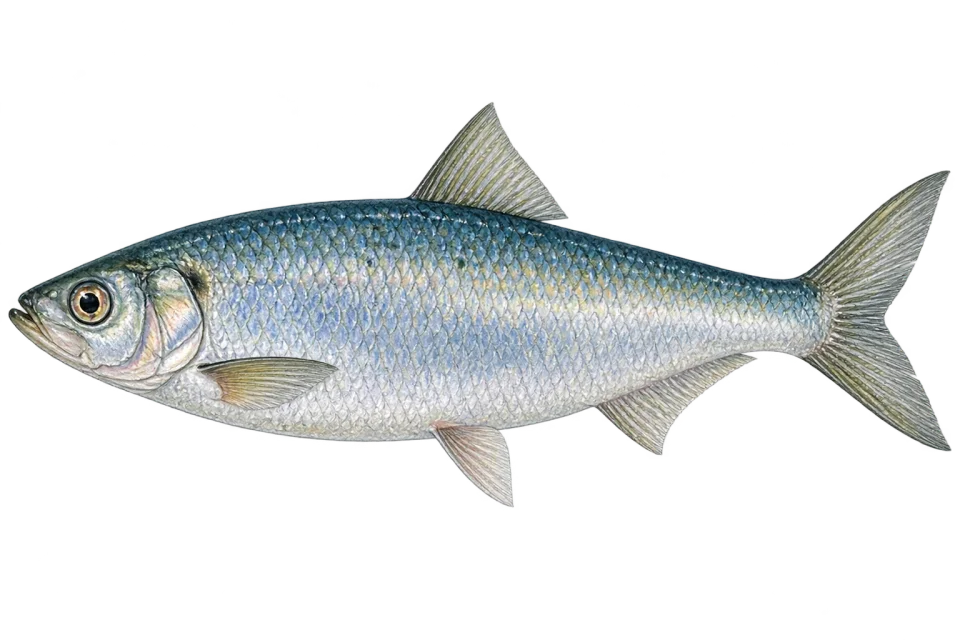
River herring

River herring

Alewife · blueback herring

Match: 2–4 in juvenile / 7–10 in adult

Seasonal context in full guide

Lures, flies & how to fish them

What to tie on

Profile matches · angling guidance

2–4 in juvenile / 7–10 in adultSilver-sided streamers and paddletails. Change the silhouette with life stage instead of fishing an adult-sized pattern all year.

Lure · MID-WATER

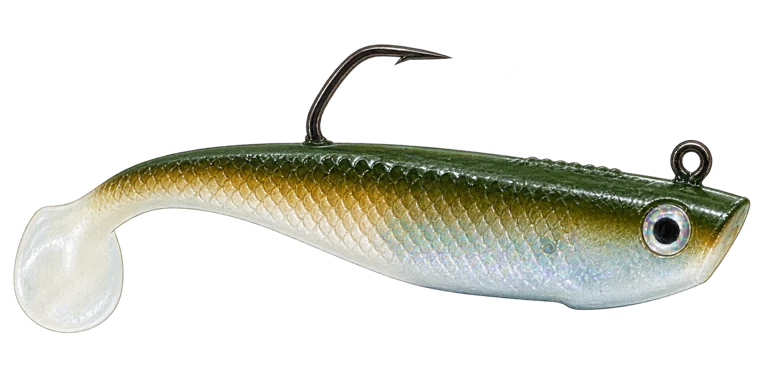
Olive integrated-weight paddletail with single exposed top hook
Hogy Protail Paddle

Olive · 3.5 in · 1 oz

A compact juvenile-baitfish profile.

Fish it: Swim across the seam beside the outflow. Adjust jig weight to hold the feeding depth.

Profile match · Product reference [21]

Fly pattern · MID-WATER

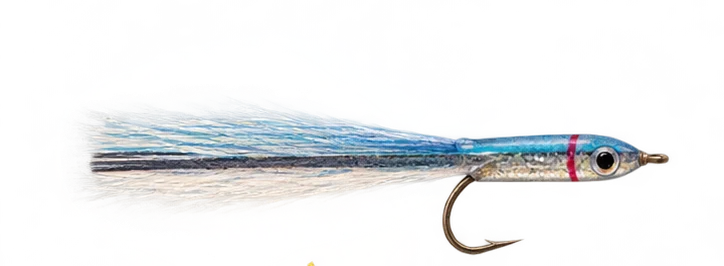
Sparse blue-silver resin-bodied fly with single hook
Umpqua Surf Candy

Light Blue · 1/0

A sparse silver-sided fly for small outbound fish.

Fish it: Match the dressing to the young fish you see. Strip with pauses through the seam.

Profile match · Pattern reference [22]

Fly pattern · BOTTOM

Popovics Herring Hollow Fleye

Suggested blue / white adult-herring tie · hook size not specified

Hollow-tied bucktail creates a broad, translucent adult-herring profile.

Fish it: Use a sinking line to reach deeper structure, then retrieve with moderate strips. Downsize the tie for juveniles.

Angling guidance · Moderate [1] [2] · Pattern reference [1]

Match the bait: Match the life stage: small outbound fall fish need a smaller offering than spring adults. For larger adult-sized bait, consider a longer minnow plug or Deceiver.

Habitat, seasonal evidence & sources ↗Back to bait finder ↑
Seasonal evidence & sources
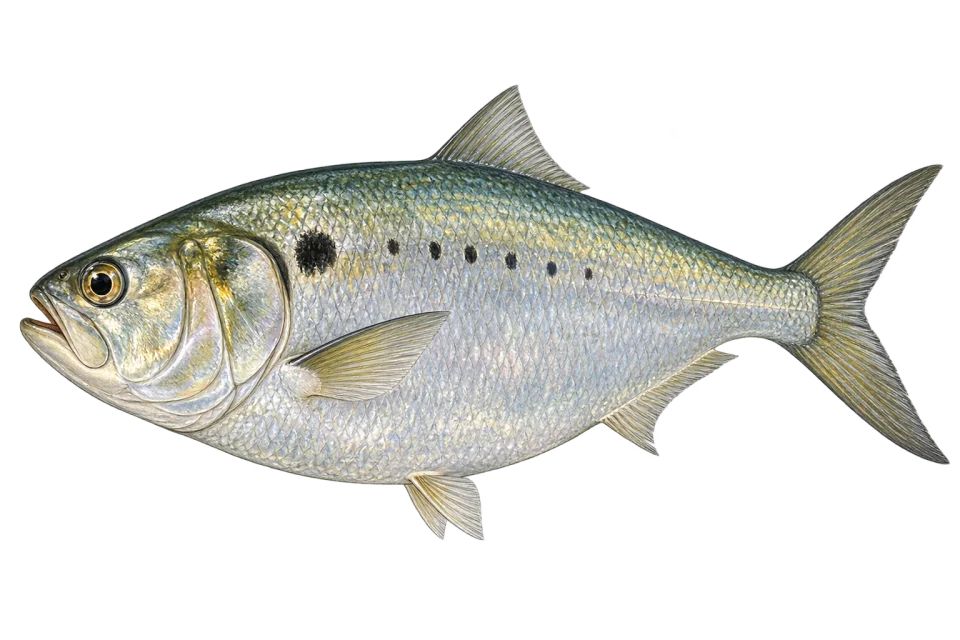
Adult menhaden

Adult menhaden

Bunker · pogies

Match: 6–10 in

Seasonal context in full guide

Lures, flies & how to fish them

What to tie on

Profile matches · angling guidance

6–10 inFull-bodied plugs, large paddletails and bunker flies. Match body depth as well as length.

Lure · TOPWATER

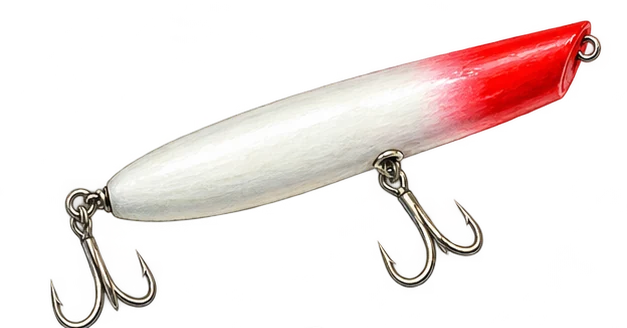
Tapered white pencil popper with red head and two trebles
Gibbs Pencil Popper

Redhead · 2¾ oz

A surface option when large bunker and feeding fish are showing.

Fish it: Reel slowly while working the rod tip rhythmically to make the plug dance.

Profile match · Product reference [23]

Lure · TOPWATER

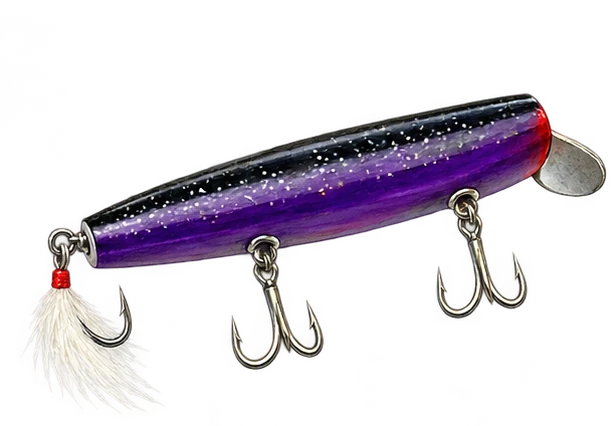
Black-purple wooden swimmer with metal pan lip and dressed tail hook
Gibbs Danny Surface Swimmer

Black / Purple · 2¼ oz · dressed-tail example

A fuller swimming profile for bait high in the water.

Fish it: Use a steady surface swim; let current work the plug. Change tools if it rolls or loses its swim.

Profile match · Product reference [24]

Fly pattern · MID-WATER

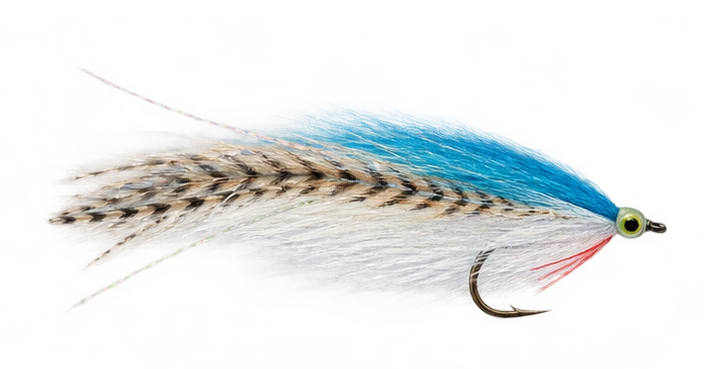
Blue-and-white hair-and-feather streamer with barred feather tail
Umpqua Big Fish Deceiver

Blue / White · 3/0

A full, long baitfish silhouette.

Fish it: Cast beside the school, settle to the feeding depth and strip with pauses.

Profile match · Pattern reference [25]

Fly pattern · TOPWATER

Joe Blados Crease Fly

Blue / Silver · 3/0

A tall reflective foam body suggests bunker struggling at the surface.

Fish it: Use a floating line beside visible bunker schools. Pop or skate with short strips, adjusting pace to feeding fish.

Angling guidance · Moderate [3] · Pattern reference [26]

Fly pattern · MID-WATER

Bob Popovics Beast Fleye

Menhaden dressing · 12 in example · hook size not specified

An extended, deep bucktail silhouette matches large adult bunker.

Fish it: Deliver ahead of feeding bass at a school’s edge. Begin with a dead drift or slow retrieve and adjust to their response.

Angling guidance · Strong [1] [3] [4] · Pattern reference [4]

Match the bait: Match body depth and the actual bunker present; the lure’s weight is a tackle specification, not a prey-size estimate.

Habitat, seasonal evidence & sources ↗Back to bait finder ↑
Seasonal evidence & sources
Peanut bunker

Peanut bunker

Young-of-year menhaden

Match: 2–4 in

Seasonal context in full guide

Lures, flies & how to fish them

What to tie on

Profile matches · angling guidance

2–4 inShort, deep-bodied flies, small swimmers or compact paddletails. A skinny sand-eel imitation has a different profile even at the same length.

Lure · MID-WATER

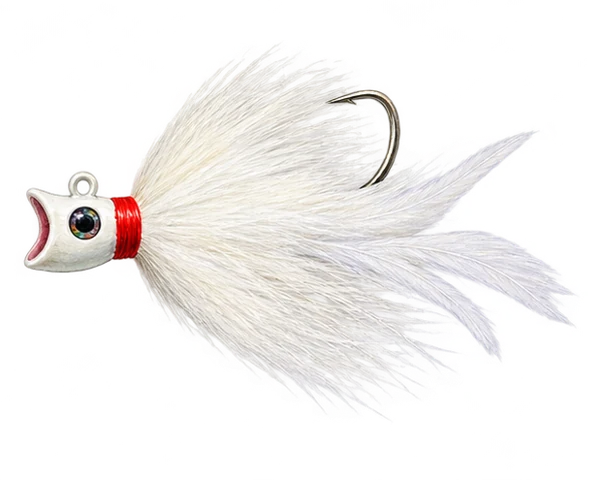
White open-mouth jighead, red thread collar, white bucktail and hackle
OG Jigs Smiling Bill

White bucktail with hackle

A fuller dressed jig suggests a short, deep-bodied baitfish.

Fish it: Swim beside or beneath the school. Choose weight to hold depth and keep the jig above rocks.

Profile match · Product reference [27]

Fly pattern · MID-WATER

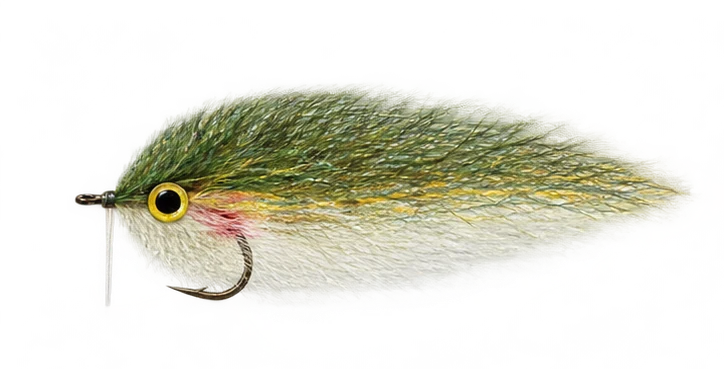
Deep synthetic olive-white baitfish fly with yellow-ring eye and single hook
EP Peanut Butter

Olive / Polar · 2/0

A broad synthetic profile for juvenile menhaden.

Fish it: Strip along the school’s edge; let the fly settle if bass are feeding below it.

Angling guidance · Moderate [5] [6] · Pattern reference [28]

Fly pattern · TOPWATER

Gartside Baby Bunker Gurgler

Blue / White · #2 or #4 saltwater hook

A wide floating body suggests a flipping peanut bunker.

Fish it: Use a floating line over surface-feeding fish. Alternate short strips, pauses and gentle twitches.

Angling guidance · Moderate [7] [8] · Pattern reference [7]

Habitat, seasonal evidence & sources ↗Back to bait finder ↑
Seasonal evidence & sources
Sand lance

Sand lance

Sand eels

Match: 3–6 in

Seasonal context in full guide

Lures, flies & how to fish them

What to tie on

Profile matches · angling guidance

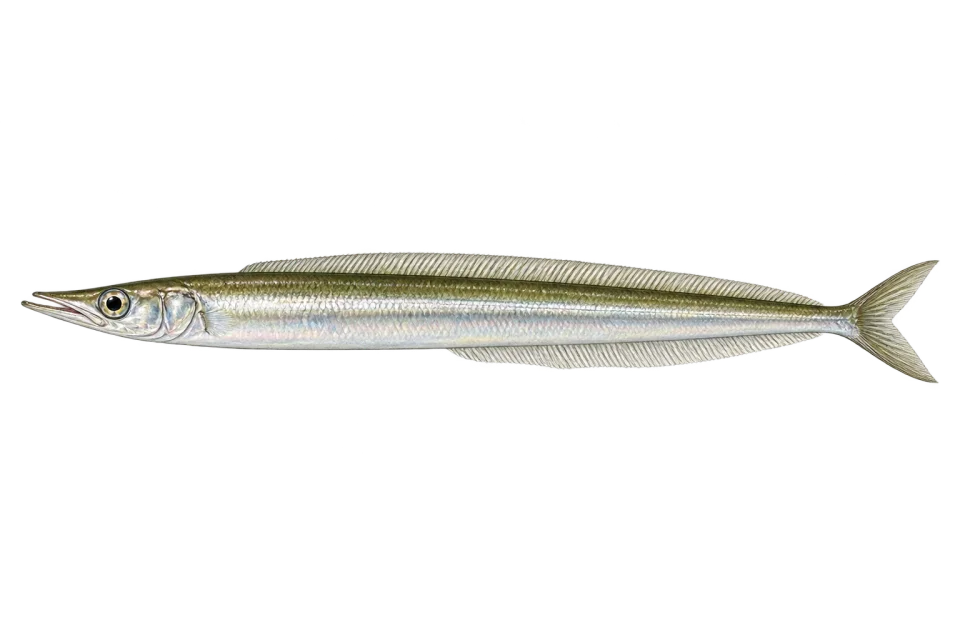
3–6 inVery slim flies, needlefish and thin soft plastics. Keep the body narrow and consider the sand-to-water-column transition.

Lure · MID-WATER

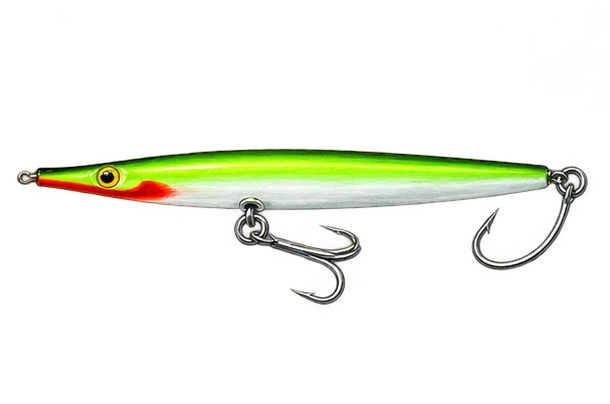
Slim green-and-white needlefish plug, belly treble and tail single hook
Super Strike Super ’N’ Fish

Black / Chartreuse / White · slow sink

A long, thin profile for sand-eel water.

Fish it: Start with a slow steady retrieve. Adjust countdown and sink rate for depth and sweep.

Profile match · Product reference [29]

Lure · BOTTOM

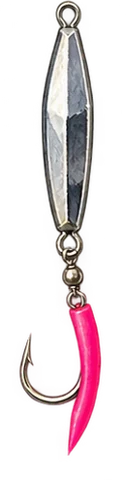
Chrome diamond jig with swivel and pink tube over a single hook
Uncle Mo’s A27 Diamond Jig

Pink tube · 3 oz

A tin-and-tube option for reach or a presentation near sand.

Fish it: Work near the sand and keep fishing into the wash. Use a lighter jig when it holds the same depth.

Profile match · Product reference [30]

Fly pattern · MID-WATER

Sparse blue-silver resin-bodied fly with single hook
Umpqua Surf Candy

Light Blue · 1/0

A sparse, narrow streamer profile.

Fish it: Choose dressing length to match the bait. Get the line to the feeding level, then strip steadily with pauses.

Profile match · Pattern reference [22]

Habitat, seasonal evidence & sources ↗Back to bait finder ↑
Seasonal evidence & sources
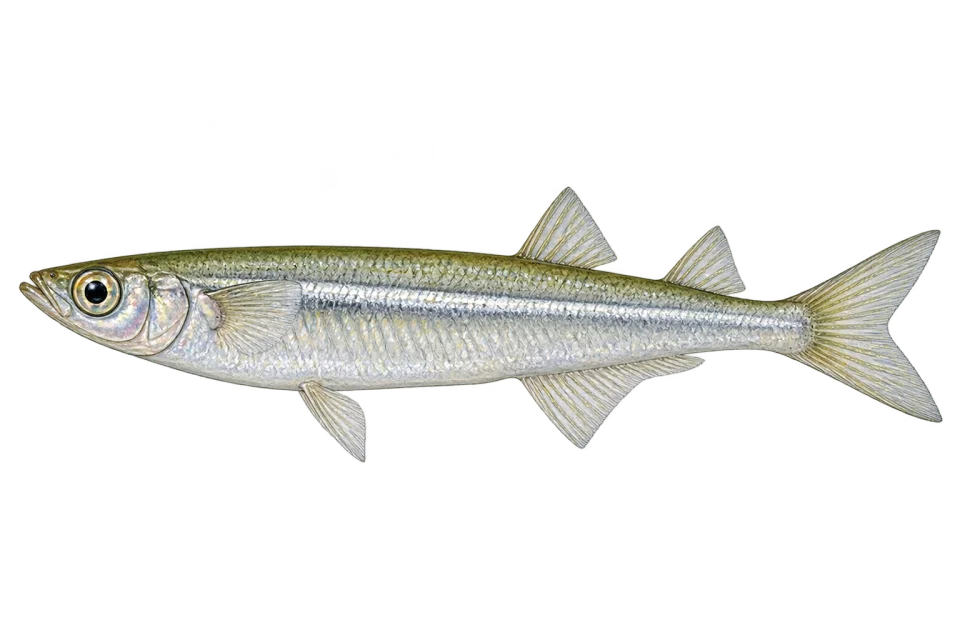
Atlantic silversides

Atlantic silversides

Spearing

Match: 2–4 in

Seasonal context in full guide

Lures, flies & how to fish them

What to tie on

Profile matches · angling guidance

2–4 inSparse translucent flies and slender silver soft plastics. Keep the head small; anchovies have a noticeably larger mouth.

Lure · MID-WATER

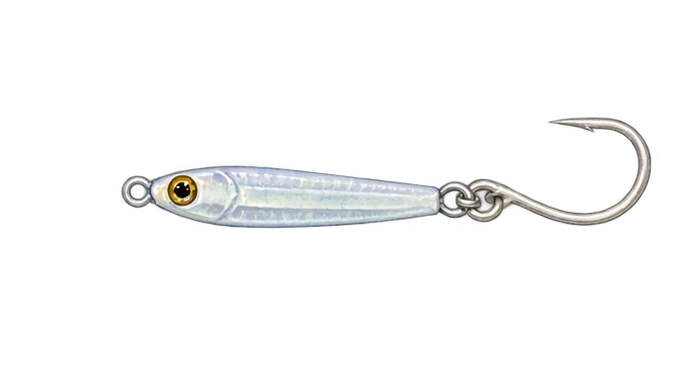
Compact silver baitfish metal jig with rear inline single hook
Hogy Peanut ’Chovy Jig

Chovy Silverside · 2 in · ⅜ oz

A compact silver profile when the school is around this size.

Fish it: Swim through the edge of the school; adjust countdown before changing the lure.

Profile match · Product reference [31]

Fly pattern · MID-WATER

Sparse blue-silver resin-bodied fly with single hook
Umpqua Surf Candy

Light Blue · 1/0

A translucent, narrow fly for spearing.

Fish it: Use steady short strips and pauses. Keep the dressing sparse and match the actual bait length.

Profile match · Pattern reference [22]

Fly pattern · MID-WATER

Ray Bondorew’s Ray’s Fly

Olive / Yellow / White · suggested #2

Sparse layered bucktail suggests a slender olive-backed silverside.

Fish it: Use an unweighted tie near the bait’s level. Try restrained strips or a controlled drift through current.

Angling guidance · Moderate [9] [10] · Pattern reference [9]

Fly pattern · BOTTOM

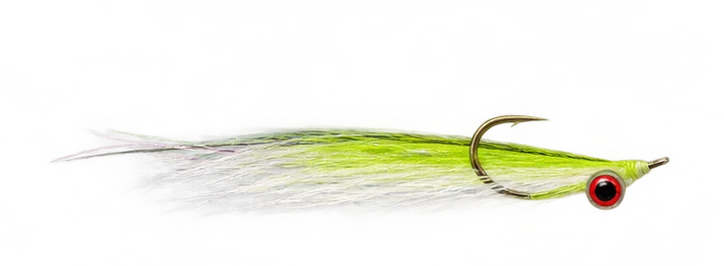
Sparse chartreuse-white bucktail fly, dumbbell eyes and hook point up
Orvis Clouser Minnow

Chartreuse / White

A sparse weighted bucktail suggests silversides near bottom.

Fish it: Let the fly settle, then strip with pauses that let it drop. Choose line density and eye weight for the feeding level.

Angling guidance · Moderate [11] [12] · Pattern reference [32]

Habitat, seasonal evidence & sources ↗Back to bait finder ↑
Seasonal evidence & sources
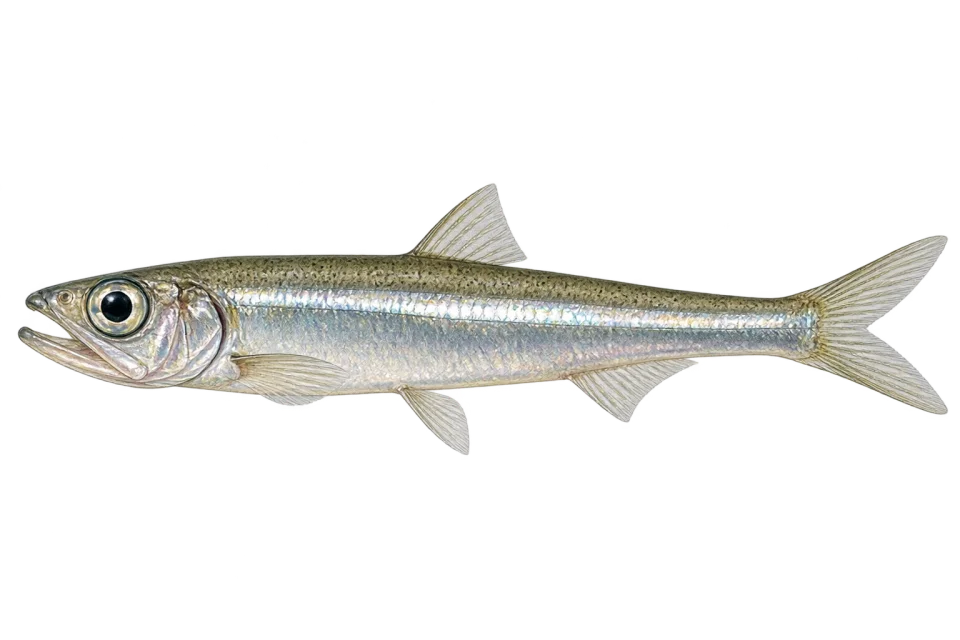
Bay anchovy

Bay anchovy

Rain bait

Match: 1–3 in

Seasonal context in full guide

Lures, flies & how to fish them

What to tie on

Profile matches · angling guidance

1–3 inTiny translucent baitfish flies, sparse epoxy-style patterns or small soft plastics. Prioritize the small outline over a large splash.

Lure · MID-WATER

Compact silver baitfish metal jig with rear inline single hook
Hogy Peanut ’Chovy Jig

Chovy Silverside · 2 in · ⅜ oz

A small metal that can reach feeding fish when bait is near 2 inches.

Fish it: Try a steady swim with brief pauses. Account for the jig sinking during each pause.

Profile match · Product reference [31]

Fly pattern · MID-WATER

Sparse blue-silver resin-bodied fly with single hook
Umpqua Surf Candy

Light Blue · 1/0

A sparse translucent profile for rain bait.

Fish it: Choose a shorter tie when the anchovies are tiny. Use short strips and pauses through the feeding lane.

Profile match · Pattern reference [22]

Lure · MID-WATER

Fish Snax Albie Snax

White · 5 in · approximately ½ oz before hook

A slender darting plastic for stripers feeding on bay anchovies.

Fish it: Rig weightless on a suitable swimbait hook. Retrieve slowly with subtle twitches and occasional pauses; this is a larger impression of the bait.

Angling guidance · Moderate [13] · Product reference [33]

Match the bait: Remove bulk before adding more action. Very small anchovies may call for a smaller fly than the example shown.

Habitat, seasonal evidence & sources ↗Back to bait finder ↑
Seasonal evidence & sources
Atlantic herring

Atlantic herring

Sea herring

Match: 3–7 in

Seasonal context in full guide

Lures, flies & how to fish them

What to tie on

Profile matches · angling guidance

3–7 inSilver streamers, swimming plugs and paddletails with a darker back. Size to the school, not the adult maximum.

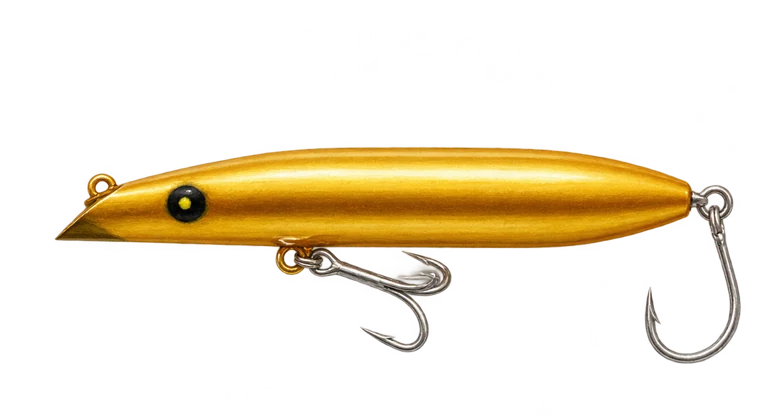
Lure · MID-WATER

Gold darter with solid slanted face, belly treble and tail single hook
Super Strike Zig Zag Darter

All Gold · 2⅜ oz

A baitfish profile that works with moving water.

Fish it: Get it swimming, maintain contact and retrieve slowly to moderately; let the plug supply the action.

Profile match · Product reference [34]

Fly pattern · MID-WATER

Blue-and-white hair-and-feather streamer with barred feather tail
Umpqua Big Fish Deceiver

Blue / White · 3/0

A fuller silver-sided streamer profile.

Fish it: Size the dressing to the school. Use line and countdown to reach feeding fish, then strip with pauses.

Profile match · Pattern reference [25]

Fly pattern · BOTTOM

Popovics Herring Hollow Fleye

Suggested blue / white adult-herring tie · hook size not specified

Hollow-tied bucktail creates a broad, translucent adult-herring profile.

Fish it: Use a sinking line to reach deeper structure, then retrieve with moderate strips. Downsize the tie for juveniles.

Angling guidance · Moderate [1] [2] · Pattern reference [1]

Habitat, seasonal evidence & sources ↗Back to bait finder ↑
Seasonal evidence & sources
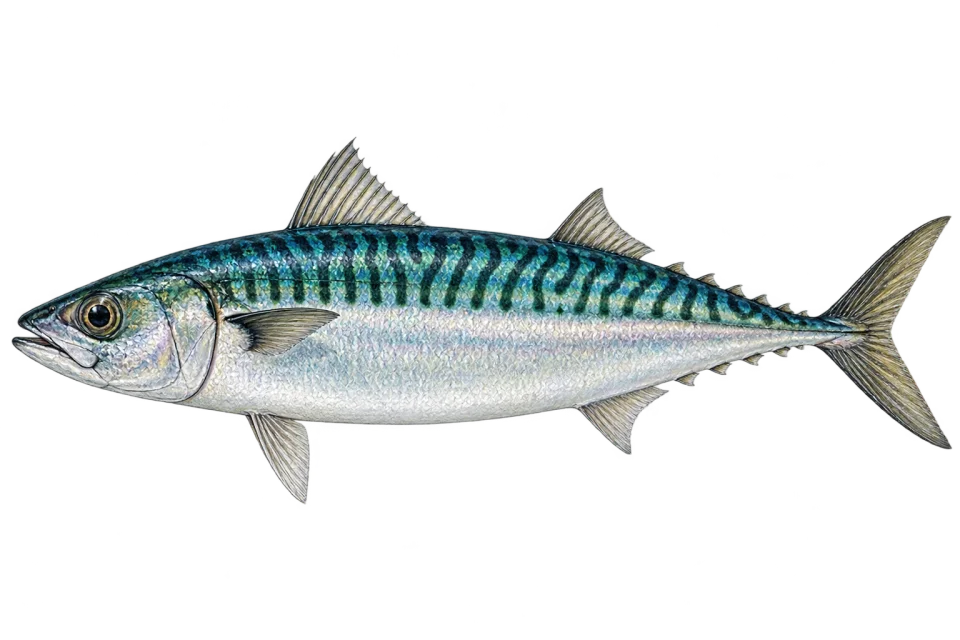
Atlantic mackerel

Atlantic mackerel

Boston mackerel

Match: 4–8 in

Seasonal context in full guide

Lures, flies & how to fish them

What to tie on

Profile matches · angling guidance

4–8 inStreamlined swimmers, paddletails or mackerel flies with a darker barred back. Watch the actual bait size.

Lure · MID-WATER

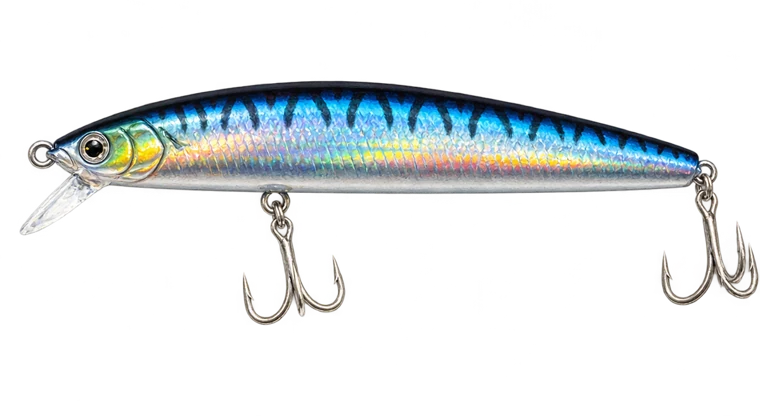
Slender barred blue-silver swimmer with clear lip and two trebles
Daiwa Salt Pro Minnow Floating

Blue Mackerel · 5.9 in

A streamlined swimmer in a verified mackerel finish.

Fish it: For small mackerel high in the water, start with a steady swim. Try a short twitch and return to that pace.

Profile match · Product reference [35]

Fly pattern · MID-WATER

Blue-and-white hair-and-feather streamer with barred feather tail
Umpqua Big Fish Deceiver

Blue / White · 3/0

A blue-white profile for appropriately sized mackerel.

Fish it: Match the school’s length; use line and countdown to reach its depth.

Profile match · Pattern reference [25]

Fly pattern · BOTTOM

Articulated Mackerel Hollow Fleye

Olive grizzly / light bucktail · 10 in example · hook size not specified

A large articulated body and barred upper wing suggest adult mackerel.

Fish it: Use a sinking line around deeper rocks and structure. Count down before retrieving; choose a smaller fly for tinker mackerel.

Angling guidance · Moderate [1] · Pattern reference [1]

Match the bait: Match the mackerel present rather than the species’ adult maximum.

Habitat, seasonal evidence & sources ↗Back to bait finder ↑
Seasonal evidence & sources
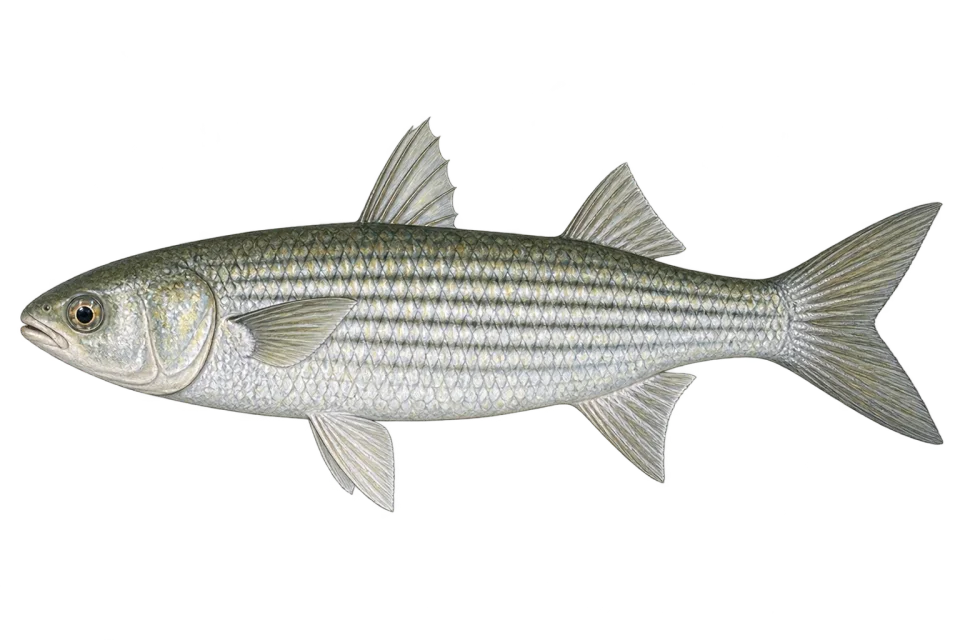
Striped mullet

Striped mullet

Finger mullet

Match: 3–5 in

Seasonal context in full guide

Lures, flies & how to fish them

What to tie on

Profile matches · angling guidance

3–5 inRound-bodied surface swimmers and mullet flies. Suggest a blunt head and substantial profile.

Lure · TOPWATER

Black-purple wooden swimmer with metal pan lip and dressed tail hook
Gibbs Danny Surface Swimmer

Black / Purple · 2¼ oz · dressed-tail example

A substantial profile for mullet traveling near the surface.

Fish it: Maintain a steady surface swim. Cover the shoreline lane when mullet are moving close.

Profile match · Product reference [24]

Fly pattern · MID-WATER

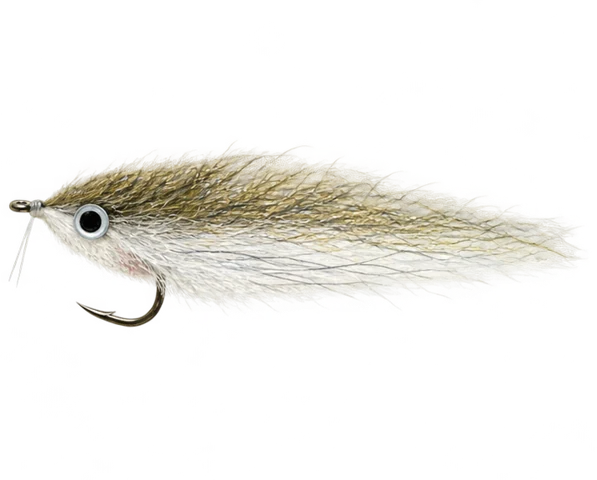
Full olive-white synthetic baitfish fly with silver-ring eye
EP Finger Mullet

Standard · 2/0

A fuller mullet-shaped synthetic fly.

Fish it: Strip and pause along the same lane while keeping contact with the fly.

Profile match · Pattern reference [36]

Fly pattern · TOPWATER

Bob Popovics Bob’s Banger

Silver · 4/0 · approximately 4¼ in

A substantial surface profile suggests finger mullet high in the water.

Fish it: Use a floating line and work it with the line hand. Begin with small continuous pops along the surface feeding lane.

Angling guidance · Moderate [14] [6] · Pattern reference [37]

Fly pattern · MID-WATER

Bob Popovics Siliclone Mullet

Suggested white or blue / white · 4–6 in · hook size not specified

A sculpted bulky head reproduces the rounded finger-mullet profile.

Fish it: Keep the fly shallow alongside migrating mullet. Adjust line and retrieve to stay in the upper water column.

Angling guidance · Moderate [14] [15] · Pattern reference [14]

Habitat, seasonal evidence & sources ↗Back to bait finder ↑
Seasonal evidence & sources
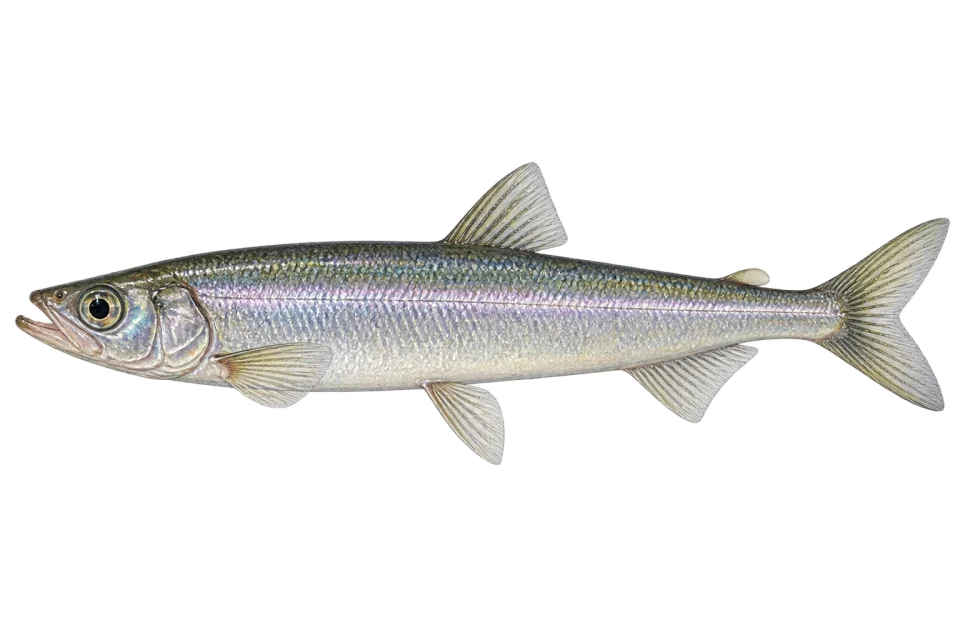
Rainbow smelt

Rainbow smelt

Sea-run smelt

Match: 3–5 in

Seasonal context in full guide

Lures, flies & how to fish them

What to tie on

Profile matches · angling guidance

3–5 inSlender silver streamers or small swimming soft plastics. Avoid confusing sea-run timing with a landlocked lake-smelt run.

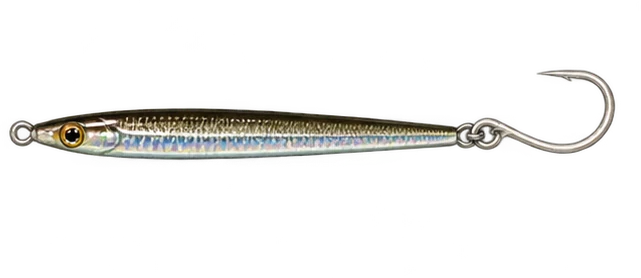
Lure · MID-WATER

Narrow olive-silver metal jig with rear single hook
Hogy Peanut Sand Eel Jig

SE Olive · 3.5 in · 1¼ oz

A narrow silver-olive profile for small, slender fish.

Fish it: Count down to the bait’s level, then swim steadily with occasional short pauses.

Profile match · Product reference [38]

Fly pattern · MID-WATER

Sparse blue-silver resin-bodied fly with single hook
Umpqua Surf Candy

Light Blue · 1/0

A slender translucent streamer.

Fish it: Match the finished fly’s length to the smelt. Try short strips with pauses near the estuary edge.

Profile match · Pattern reference [22]

Habitat, seasonal evidence & sources ↗Back to bait finder ↑
Seasonal evidence & sources
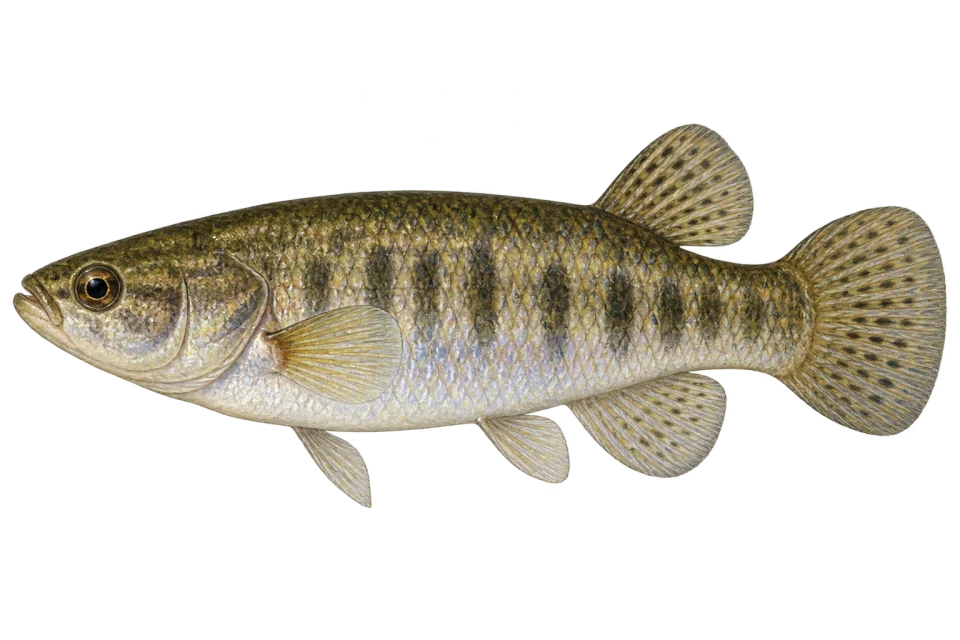
Mummichog

Mummichog

Killies · marsh minnows

Match: 1–3 in

Seasonal context in full guide

Lures, flies & how to fish them

What to tie on

Profile matches · angling guidance

1–3 inSmall olive/brown minnow flies and compact soft plastics along flooded marsh edges and drains.

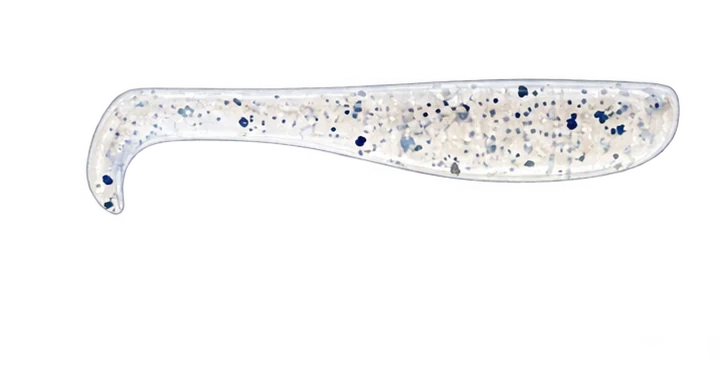
Lure · MID-WATER

Small translucent glitter paddletail body, without hook or jighead
Z-Man Slim SwimZ

Pearl Blue Glimmer · 2.5 in · body only

A small minnow profile for marsh edges.

Fish it: Rig straight on a compatible small jighead. Swim above grass and mud; reduce weight if it plows bottom.

Profile match · Product reference [39]

Fly pattern · BOTTOM

Sparse chartreuse-white bucktail fly, dumbbell eyes and hook point up
Orvis Clouser Minnow

Chartreuse / White

A weighted minnow pattern for the edge or drain.

Fish it: Use short strips and pauses with contact. The dumbbell eyes turn the hook point up.

Profile match · Pattern reference [32]

Habitat, seasonal evidence & sources ↗Back to bait finder ↑
Seasonal evidence & sources
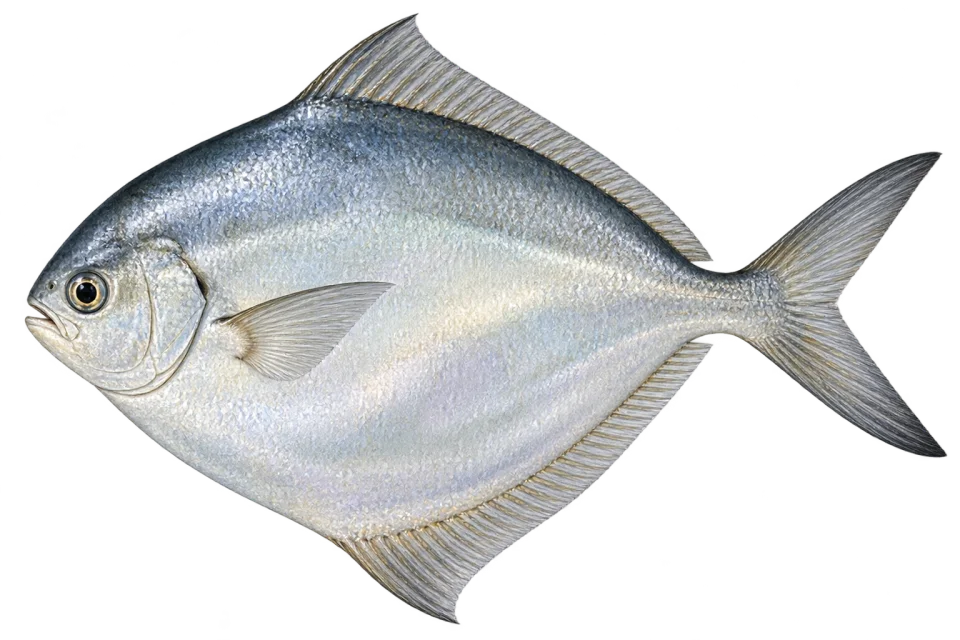
Butterfish

Butterfish

Atlantic butterfish

Match: 2–4 in

Seasonal context in full guide

Lures, flies & how to fish them

What to tie on

Profile matches · angling guidance

2–4 inBroad, compressed baitfish flies and compact fluttering profiles. The tall body matters more than a long tail.

Lure · MID-WATER

White open-mouth jighead, red thread collar, white bucktail and hackle
OG Jigs Smiling Bill

White bucktail with hackle

A full dressed profile for short, deep-bodied bait.

Fish it: Swim around the edge or below the school; choose weight for the feeding level.

Profile match · Product reference [27]

Fly pattern · MID-WATER

Deep synthetic olive-white baitfish fly with yellow-ring eye and single hook
EP Peanut Butter

Olive / Polar · 2/0

A tall, compressed synthetic profile.

Fish it: Choose a broad tie that matches the bait’s body depth. Strip with pauses at the school’s depth.

Profile match · Pattern reference [28]

Match the bait: These are profile choices. Avoid a long, skinny imitation when the observed butterfish are short and deep-bodied.

Habitat, seasonal evidence & sources ↗Back to bait finder ↑
Seasonal evidence & sources
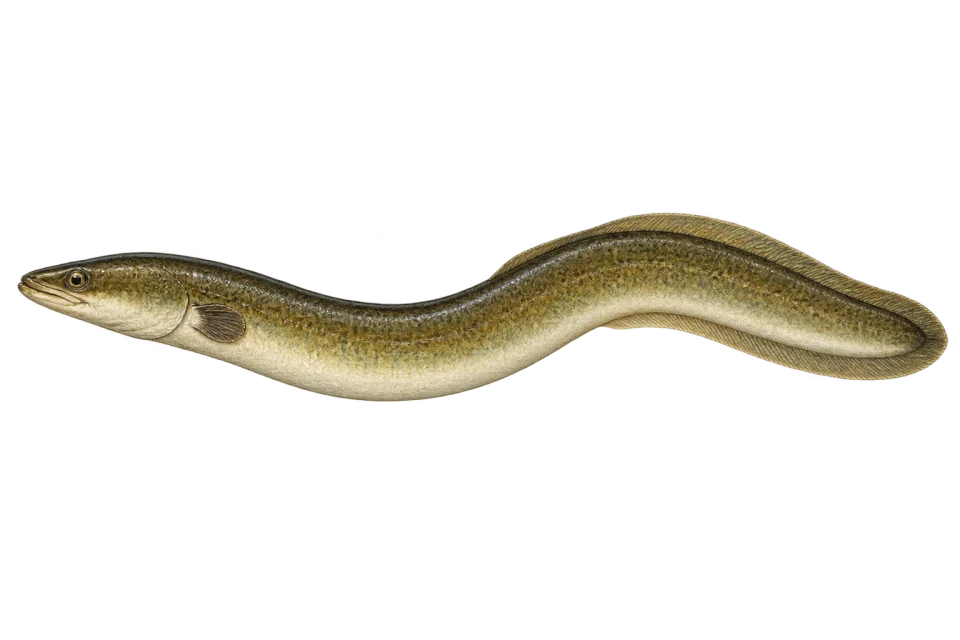
American eel

American eel

Yellow eel · silver eel

Match: 7–12 in

Seasonal context in full guide

Lures, flies & how to fish them

What to tie on

Profile matches · angling guidance

7–12 inLong, dark soft plastics, eel flies and slender plugs. A slow, flexible outline distinguishes an eel from a schooling baitfish.

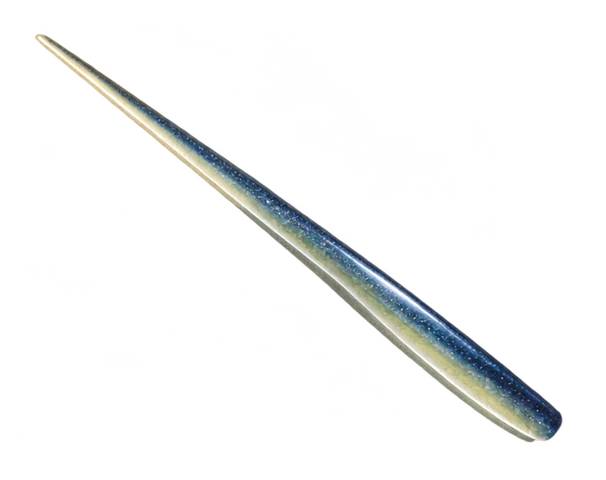
Lure · MID-WATER

Long dark-blue soft-plastic eel body with tapered tail, without rigging
Gravity Tackle GT Eel

Black Sapphire · 13.5 in · body only

A long flexible eel body for larger eel profiles.

Fish it: Rig on a compatible jighead or weighted hook. Swim slowly at the intended depth.

Profile match · Product reference [40]

Lure · MID-WATER

Slim green-and-white needlefish plug, belly treble and tail single hook
Super Strike Super ’N’ Fish

Black / Chartreuse / White · slow sink

A slender plug alternative.

Fish it: Start with a slow steady retrieve along the edge; choose sink rate for the water.

Profile match · Product reference [29]

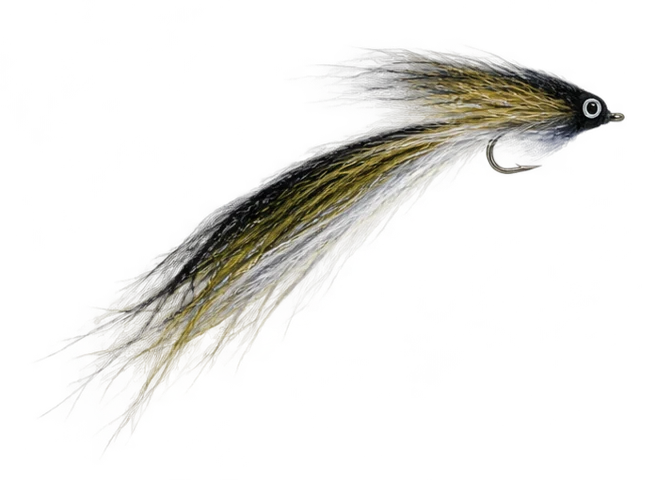
Fly pattern · MID-WATER

Black-olive-white articulated streamer with long flowing tail
Umpqua Flutter Eel

Articulated pattern · SKU 19336

An articulated streamer with a long mobile tail.

Fish it: Use long smooth strips and pauses. Control depth with the line and countdown.

Profile match · Pattern reference [41]

Fly pattern · TOPWATER

Lou Tabory’s Snake Fly

Black · slim eel dressing · hook size not specified

A buoyant head and long dressing create an eel-like surface silhouette.

Fish it: Use a buoyant tie on a floating line and wake it slowly. The same pattern can fish deeper on a sinking line.

Angling guidance · Moderate [3] · Pattern reference [3]

Fly pattern · MID-WATER

Ben Whalley’s Sluggo Eel Fly

Suggested black night tie · size not specified by tier

A long eel silhouette combines with a Slug-Go-like sliding action.

Fish it: Fish at night around boulder fields. Use strips and pauses that let the fly slide rather than continually jig.

Angling guidance · Moderate [4] · Pattern reference [4]

Match the bait: The 13.5-inch GT Eel is a larger option. Downsize when the eels or the tackle call for it.

Habitat, seasonal evidence & sources ↗Back to bait finder ↑
Seasonal evidence & sources
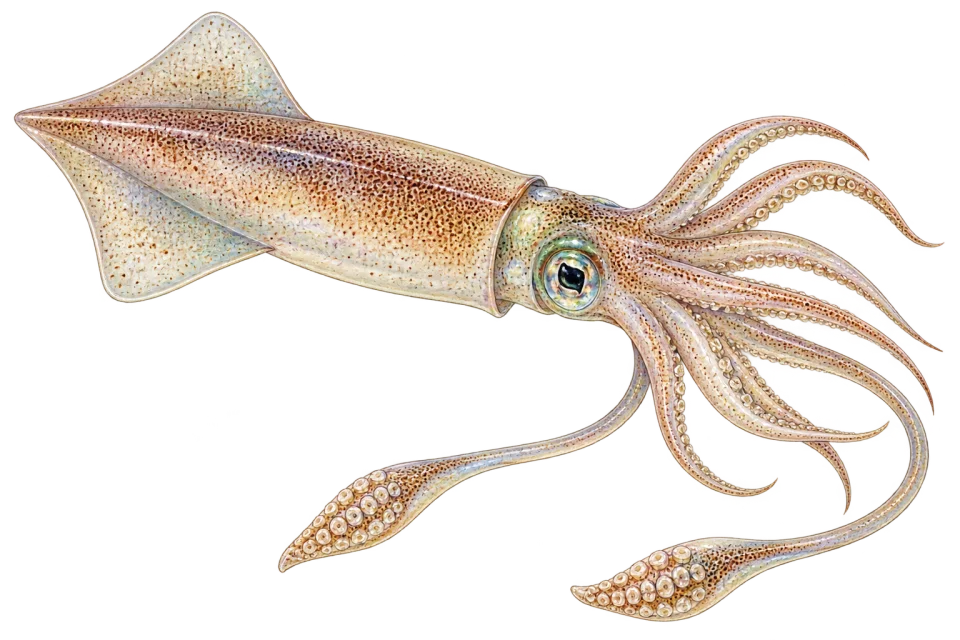
Longfin squid

Longfin squid

Squid

Match: 4–7 in overall

Seasonal context in full guide

Lures, flies & how to fish them

What to tie on

Profile matches · angling guidance

4–7 in overallSquid flies or soft plastics with a tapered mantle and mobile trailing material; vary translucent, tan and pink tones.

Lure · MID-WATER

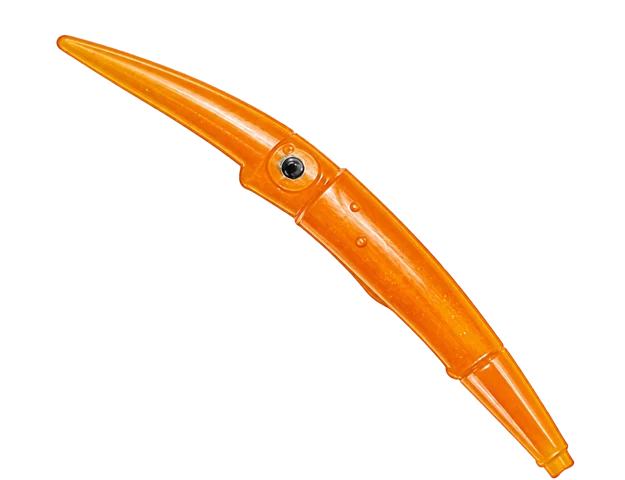
Amber molded squid plastic with tapered mantle and trailing appendages, unrigged
Hogy Pocket Squid

Amber · 6.5 in · body only

A tapered molded squid profile with trailing appendages.

Fish it: Rig on compatible hardware. Use short pulls and pauses that let the plastic settle or glide.

Profile match · Product reference [42]

Fly pattern · MID-WATER

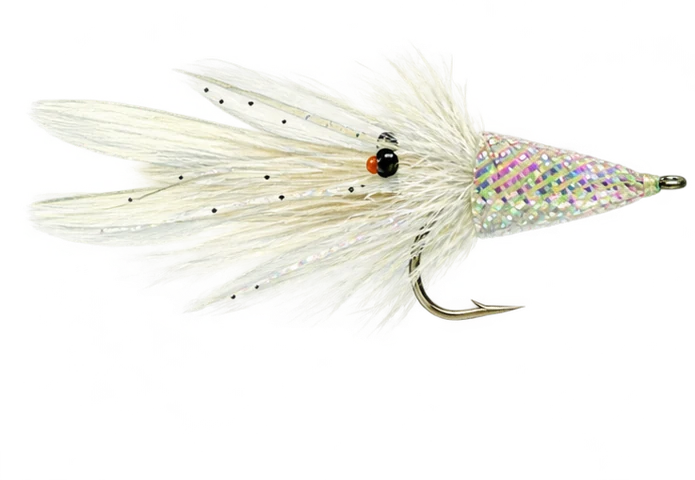
Holographic conical squid fly with white collar, trailing feathers and stalked eyes
Fulling Mill EeZee Squid

Pattern 9311 · 1/0

A compact squid-pattern example.

Fish it: Use a short pull followed by a pause. Choose line depth for the feeding fish.

Profile match · Pattern reference [43]

Fly pattern · MID-WATER

Alan Caolo’s Black Magic

Black / Purple · Mustad 34011 · 1/0–2/0

Pulsing dark hackles and splayed feathers suggest squid after dark.

Fish it: Fish shallow inshore water at night where squid are present. Use a shallow subsurface retrieve with pauses for feather movement.

Angling guidance · Moderate [16] · Pattern reference [16]

Match the bait: Overall length includes trailing material. Choose a longer fly when the squid you see are larger than this compact pattern.

Habitat, seasonal evidence & sources ↗Back to bait finder ↑
Seasonal evidence & sources
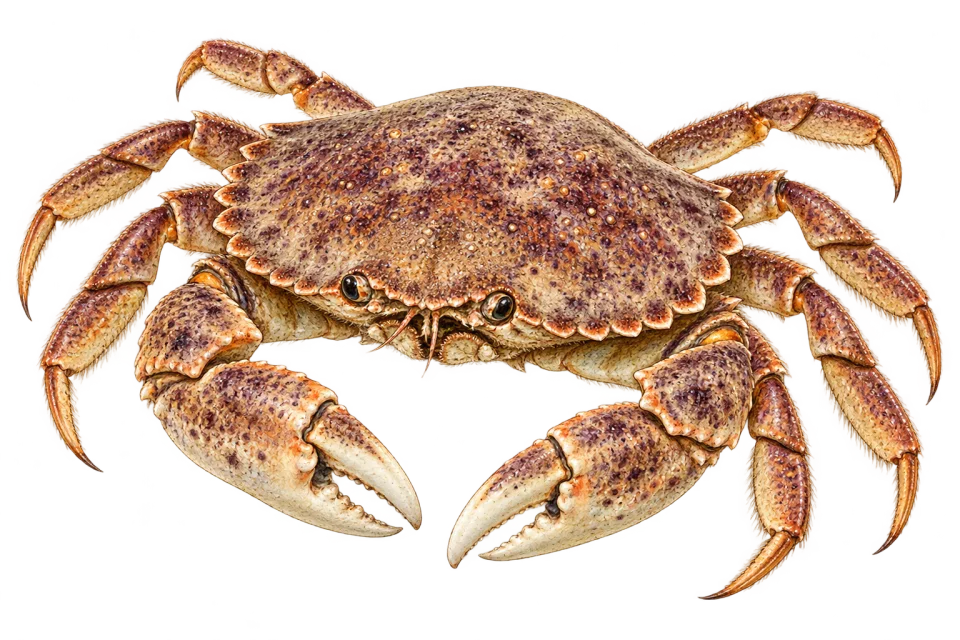
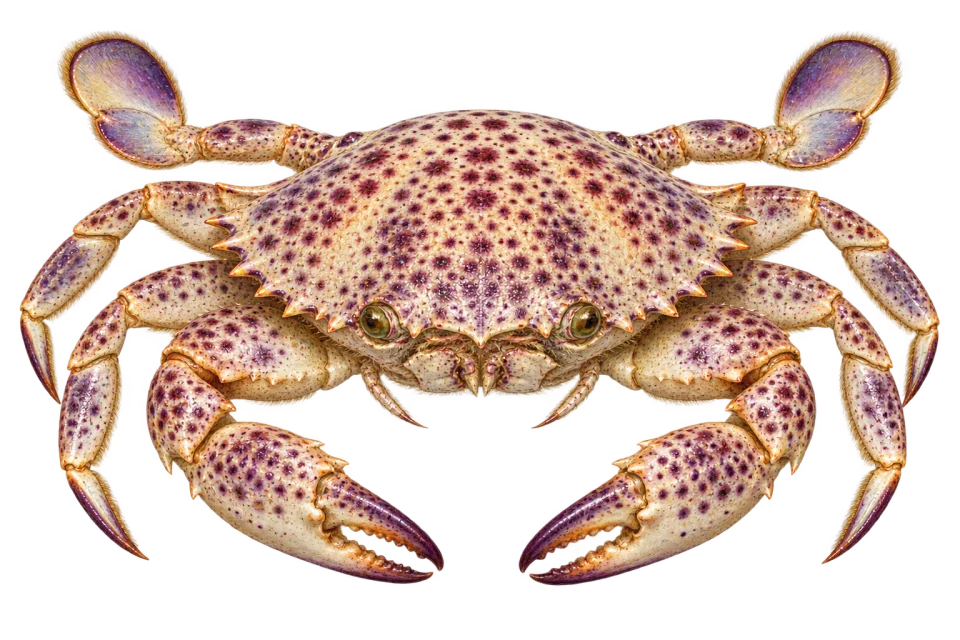
Atlantic rock crab

Atlantic rock crab

Rock crab

Match: 1–2 in body width

Seasonal context in full guide

Lures, flies & how to fish them

What to tie on

Profile matches · angling guidance

1–2 in body widthWeighted tan or mottled crab flies and compact bottom presentations. Match the shell width, not leg-tip span.

Lure · BOTTOM

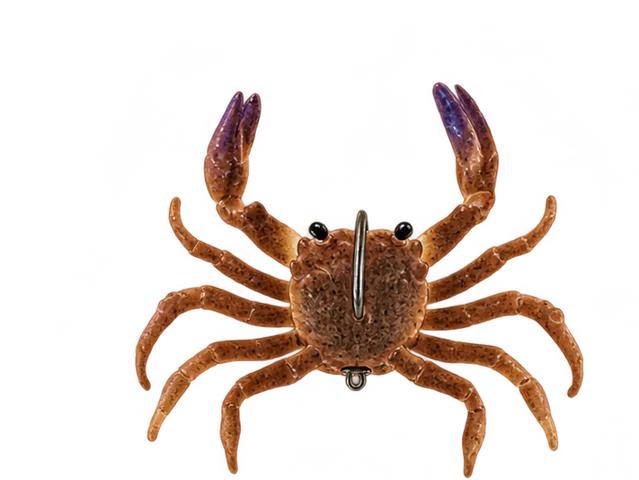
Small tan crab lure with claws, jointed legs and integrated up-facing hook
Chasebaits Crusty Crab

Tan · 50 mm

A small shore-crab-shaped lure for a light presentation.

Fish it: Let it settle near rocky edges and clear patches between cover. Use short movements and pauses rather than a constant high swim.

Profile match · Product reference [44]

Fly pattern · BOTTOM

Oval yarn crab fly with barred rubber legs, feather tail and weighted eyes
Umpqua Improved Merkin

Brown / Tan · #2

A compact tied crab footprint.

Fish it: Short strips near bottom with pauses; keep it from burying or wedging into rock.

Profile match · Pattern reference [45]

Lure · BOTTOM

Savage Gear Duratech RTF Crab

Green Crab · 1 in listed size · preweighted

A compact crab body supplies a bottom-forage silhouette.

Fish it: Drift near bottom past pilings, marsh points or current edges. Keep contact; the green finish is an impressionistic match for other crab species.

Angling guidance · Moderate [17] · Product reference [46]

Match the bait: Match the crab’s body width and the bottom color. These examples suggest a crab profile; the pictured tan lure is not a literal replica of every crab species.

Habitat, seasonal evidence & sources ↗Back to bait finder ↑
Seasonal evidence & sources
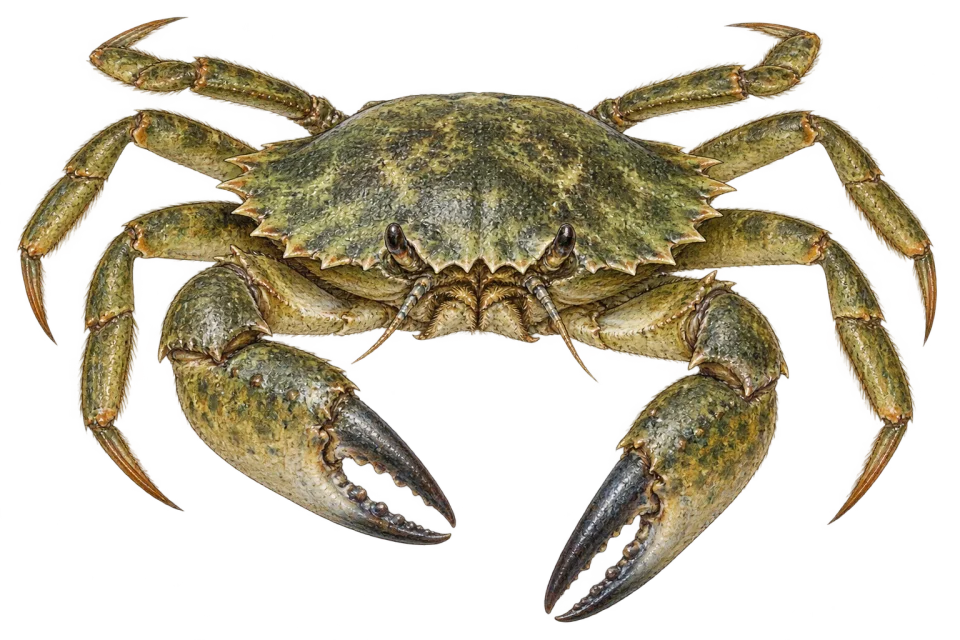
European green crab

European green crab

Green crab

Match: 1–2 in body width

Seasonal context in full guide

Lures, flies & how to fish them

What to tie on

Profile matches · angling guidance

1–2 in body widthMuted olive, tan or brown crab flies. Set the pattern’s weight for the bottom you are fishing.

Lure · BOTTOM

Small tan crab lure with claws, jointed legs and integrated up-facing hook
Chasebaits Crusty Crab

Tan · 50 mm

A small shore-crab-shaped lure for a light presentation.

Fish it: Let it settle near sheltered cobble, rock edges and shallow estuary margins. Use short movements and pauses rather than a constant high swim.

Profile match · Product reference [44]

Fly pattern · BOTTOM

Oval yarn crab fly with barred rubber legs, feather tail and weighted eyes
Umpqua Improved Merkin

Brown / Tan · #2

A compact tied crab footprint.

Fish it: Let it settle on clear bottom, then use short strips and pauses near the cover.

Profile match · Pattern reference [45]

Lure · BOTTOM

Savage Gear Duratech RTF Crab

Green Crab · 1 in listed size · preweighted

A compact crab body supplies a bottom-forage silhouette.

Fish it: Drift near bottom past pilings, marsh points or current edges. Keep contact; the green finish is an impressionistic match for other crab species.

Angling guidance · Moderate [17] · Product reference [46]

Match the bait: Match the crab’s body width and the bottom color. These examples suggest a crab profile; the pictured tan lure is not a literal replica of every crab species.

Habitat, seasonal evidence & sources ↗Back to bait finder ↑
Seasonal evidence & sources
Lady crab

Lady crab

Calico crab

Match: 1–2 in body width

Seasonal context in full guide

Lures, flies & how to fish them

What to tie on

Profile matches · angling guidance

1–2 in body widthSand-colored crab flies with a broad, flat outline; keep the presentation near the sand.

Lure · BOTTOM

Small tan crab lure with claws, jointed legs and integrated up-facing hook
Chasebaits Crusty Crab

Tan · 50 mm

A small shore-crab-shaped lure for a light presentation.

Fish it: Let it settle near sand and sand-edge habitat. Use short movements and pauses rather than a constant high swim.

Profile match · Product reference [44]

Fly pattern · BOTTOM

Oval yarn crab fly with barred rubber legs, feather tail and weighted eyes
Umpqua Improved Merkin

Brown / Tan · #2

A compact tied crab footprint.

Fish it: Keep the fly near the sand. Make a short scoot, pause, and stay in contact.

Profile match · Pattern reference [45]

Lure · BOTTOM

Savage Gear Duratech RTF Crab

Green Crab · 1 in listed size · preweighted

A compact crab body supplies a bottom-forage silhouette.

Fish it: Drift near bottom past pilings, marsh points or current edges. Keep contact; the green finish is an impressionistic match for other crab species.

Angling guidance · Moderate [17] · Product reference [46]

Match the bait: Match the crab’s body width and the bottom color. These examples suggest a crab profile; the pictured tan lure is not a literal replica of every crab species.

Habitat, seasonal evidence & sources ↗Back to bait finder ↑
Seasonal evidence & sources
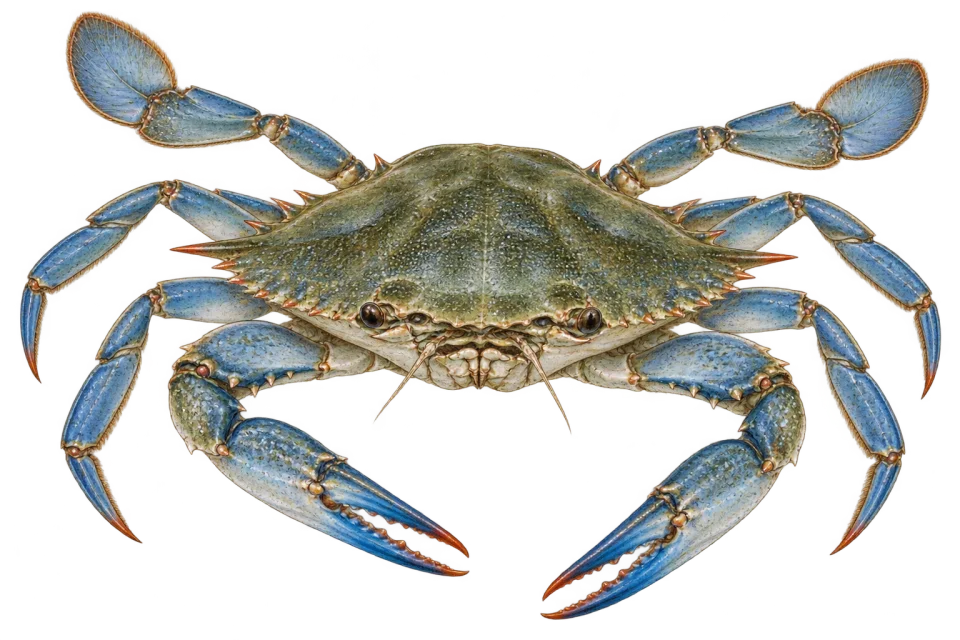
Blue crab

Blue crab

Juvenile blue crab

Match: 1–2 in body width

Seasonal context in full guide

Lures, flies & how to fish them

What to tie on

Profile matches · angling guidance

1–2 in body widthSmall swimming-crab flies in muted olive/tan with restrained blue accents. Work the lower water column around marsh edges.

Lure · BOTTOM

Small tan crab lure with claws, jointed legs and integrated up-facing hook
Chasebaits Crusty Crab

Tan · 50 mm

A small shore-crab-shaped lure for a light presentation.

Fish it: Let it settle near marsh edges, sand and estuarine bottom. Use short movements and pauses rather than a constant high swim.

Profile match · Product reference [44]

Fly pattern · BOTTOM

Oval yarn crab fly with barred rubber legs, feather tail and weighted eyes
Umpqua Improved Merkin

Brown / Tan · #2

A compact tied crab footprint.

Fish it: Match the small crab’s footprint. Use short bottom-oriented strips with pauses.

Profile match · Pattern reference [45]

Lure · BOTTOM

Z-Man Kicker CrabZ

Redbone · 3.5 in · add jighead for bottom contact

A sideways-swimming body and moving claw suggest a crab.

Fish it: Retrieve extremely slowly along bottom, making small puffs of sediment. This recommendation concerns blue-claw crabs.

Angling guidance · Moderate [18] · Product reference [47]

Match the bait: Match the crab’s body width and the bottom color. These examples suggest a crab profile; the pictured tan lure is not a literal replica of every crab species.

Habitat, seasonal evidence & sources ↗Back to bait finder ↑
Seasonal evidence & sources
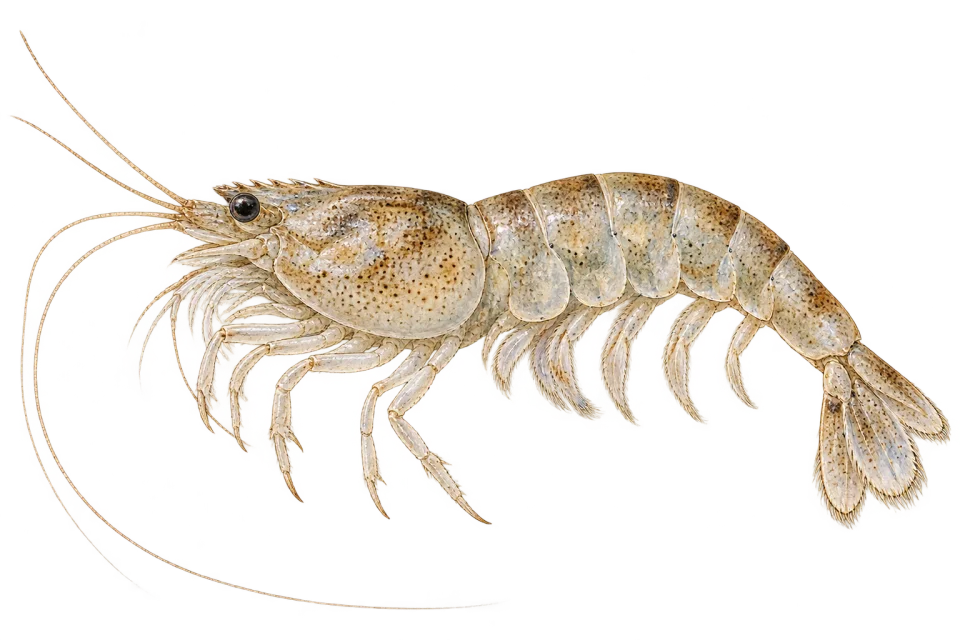
Sand shrimp

Sand shrimp

Sevenspine bay shrimp

Match: 1–2 in

Seasonal context in full guide

Lures, flies & how to fish them

What to tie on

Profile matches · angling guidance

1–2 inSparse tan or translucent shrimp flies close to the bottom. Short movements and pauses are a presentation suggestion, not a tested catch advantage.

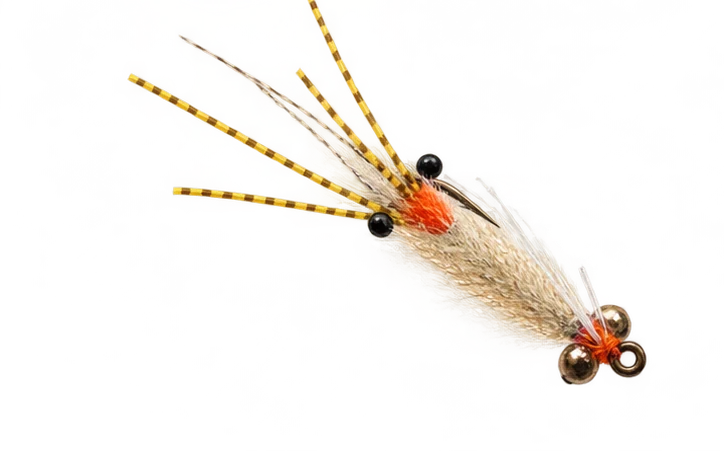
Fly pattern · BOTTOM

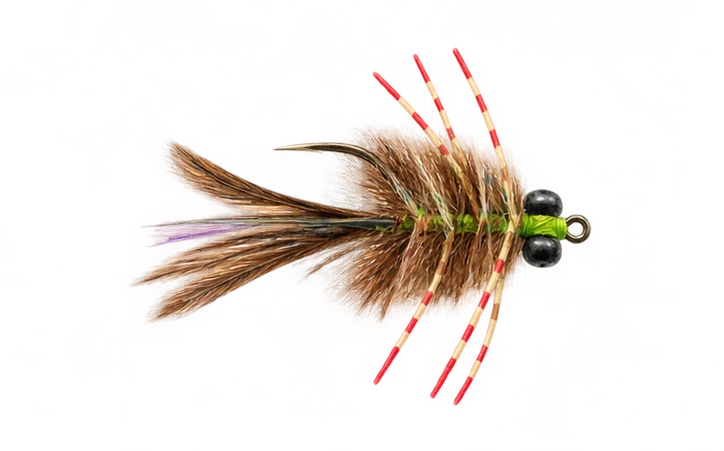
Tan shrimp fly with black stalk eyes, orange accent, barred legs and bead-chain eyes
EP Spawning Shrimp

Tan · #4 · Bead Chain

A weighted shrimp profile for shallow bottom work.

Fish it: Use short strips with pauses over sand. Adjust line depth to keep it near the feeding layer.

Profile match · Pattern reference [48]

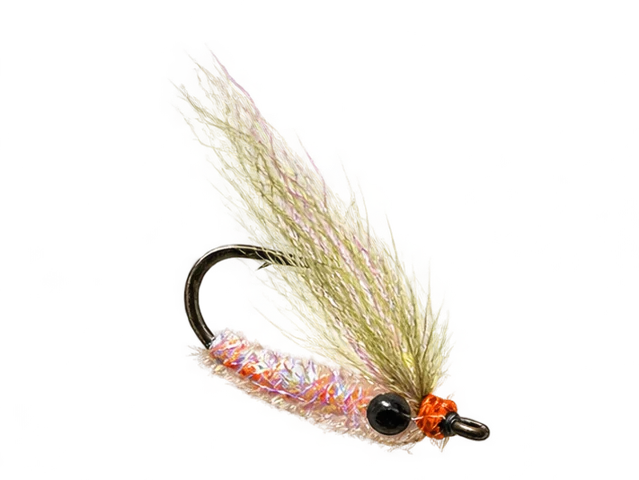
Fly pattern · BOTTOM

Sparse pale-olive tuft over pearl shrimp body, dark eyes and orange thread head
EP Turneffe Micro Shrimp

Pearl / Pale Olive · #8

A smaller, sparser alternative when the shrimp are small.

Fish it: Use small movements with pauses, letting the fly settle between strips.

Profile match · Pattern reference [49]

Fly pattern · BOTTOM

Caolo Modified Tailing Striper Fly

Motor oil / Ginger · #4–#2 · bead-chain or small dumbbell eyes

A small bottom-working pattern for stripers selectively feeding on sand shrimp.

Fish it: Present ahead of tailing or mudding stripers on shallow flats. Let it settle, then use small movements and pauses.

Angling guidance · Moderate [16] · Pattern reference [16]

Match the bait: Match finished fly length to the shrimp present, rather than choosing by hook size alone.

On spinning tackle: On spinning tackle, a casting float can carry a light shrimp fly. Set the leader to reach the feeding level.

Habitat, seasonal evidence & sources ↗Back to bait finder ↑
Seasonal evidence & sources
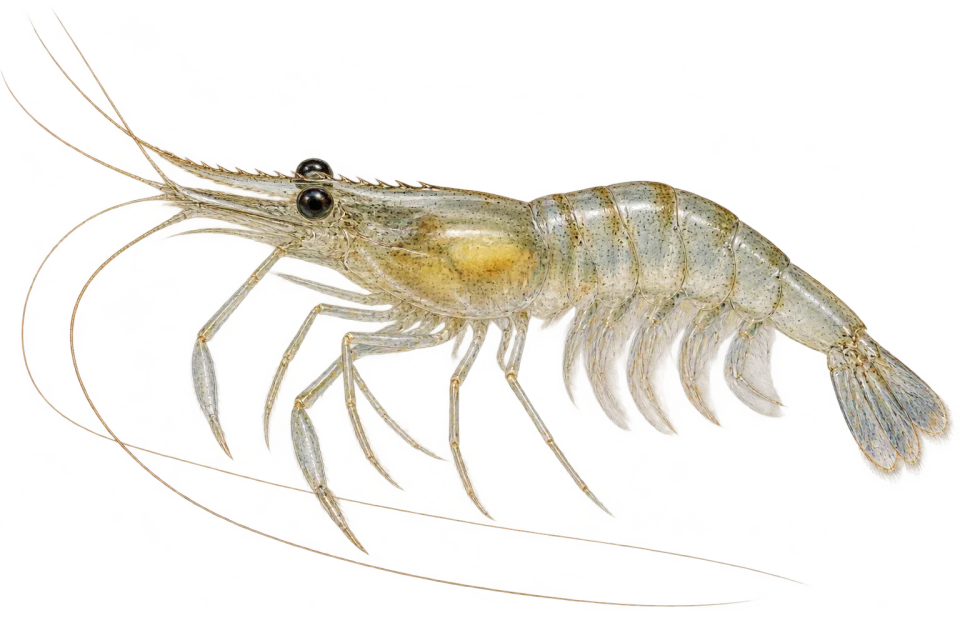
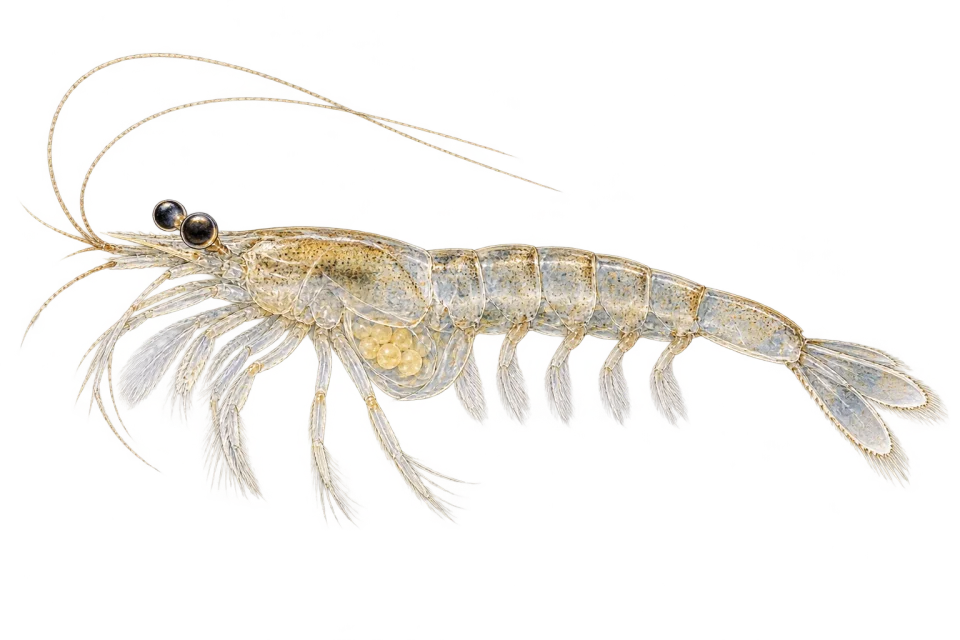
Grass shrimp

Grass shrimp

Common grass shrimp

Match: ½–1½ in

Seasonal context in full guide

Lures, flies & how to fish them

What to tie on

Profile matches · angling guidance

½–1½ inSmall, lightly dressed translucent shrimp flies. A hint of body and dark eyes can be enough to suggest the profile.

Fly pattern · MID-WATER

Sparse pale-olive tuft over pearl shrimp body, dark eyes and orange thread head
EP Turneffe Micro Shrimp

Pearl / Pale Olive · #8

A sparse micro-shrimp pattern rather than a bulky 2.5-inch shrimp lure.

Fish it: Use very short strips or a controlled drift near the vegetation edge. Keep the presentation in the feeding layer.

Profile match · Pattern reference [49]

Lure · MID-WATER

Lunker City Fin-S Fish

Rainbow Trout · 2.5 in · lightly weighted

Tombs recommends small Rainbow Trout Fin-S Fish as grass-shrimp impersonations.

Fish it: Cast uptide and allow a controlled mid-depth drift. This is an impressionistic substitute, not an anatomically accurate shrimp.

Angling guidance · Moderate [19] · Product reference [50]

Lure · MID-WATER

H&H TKO Shrimp

Clear · 3.5 in · ¼ oz

Tombs names this plastic for stripers feeding on drifting grass shrimp.

Fish it: Drift through the feeding level rather than dragging bottom. This 3.5-inch lure is oversized; skip it when bass demand tiny shrimp.

Angling guidance · Moderate [19] · Product reference [51]

Fly pattern · MID-WATER

Enrico Puglisi EP Grass Shrimp

Transparent · #1 · smaller custom tie when needed

A translucent shrimp profile matches grass shrimp carried through outflows.

Fish it: Dead-drift through the feeding lane on an ebb tide. Balance the presentation to remain suspended rather than sinking immediately.

Angling guidance · Moderate [19] · Pattern reference [52]

Match the bait: For very small shrimp, choose a shorter and sparser tie than the pictured example.

On spinning tackle: Use the same small fly under a casting float on light spinning tackle. Let it drift through the feeding lane with contact.

Habitat, seasonal evidence & sources ↗Back to bait finder ↑
Seasonal evidence & sources
Mysid shrimp

Mysid shrimp

Opossum shrimp

Match: ¼–¾ in

Seasonal context in full guide

Lures, flies & how to fish them

What to tie on

Profile matches · angling guidance

¼–¾ inVery sparse micro-shrimp flies. Observe the level of the actual prey and feeding fish before choosing surface or deeper presentations.

Fly pattern · MID-WATER

Sparse pale-olive tuft over pearl shrimp body, dark eyes and orange thread head
EP Turneffe Micro Shrimp

Pearl / Pale Olive · #8

A starting shrimp-pattern reference for very small prey.

Fish it: Observe whether fish are feeding near bottom or higher in the water. Use a controlled drift and tiny strips at that level.

Profile match · Pattern reference [49]

Match the bait: Match the tiny prey you see: a ¼-inch mysid needs a much shorter, sparser custom tie than many commercial #8 shrimp flies.

On spinning tackle: Carry the correctly sized fly below a casting float on light spinning tackle; adjust leader depth to the feeding layer.

Habitat, seasonal evidence & sources ↗Back to bait finder ↑
Seasonal evidence & sources
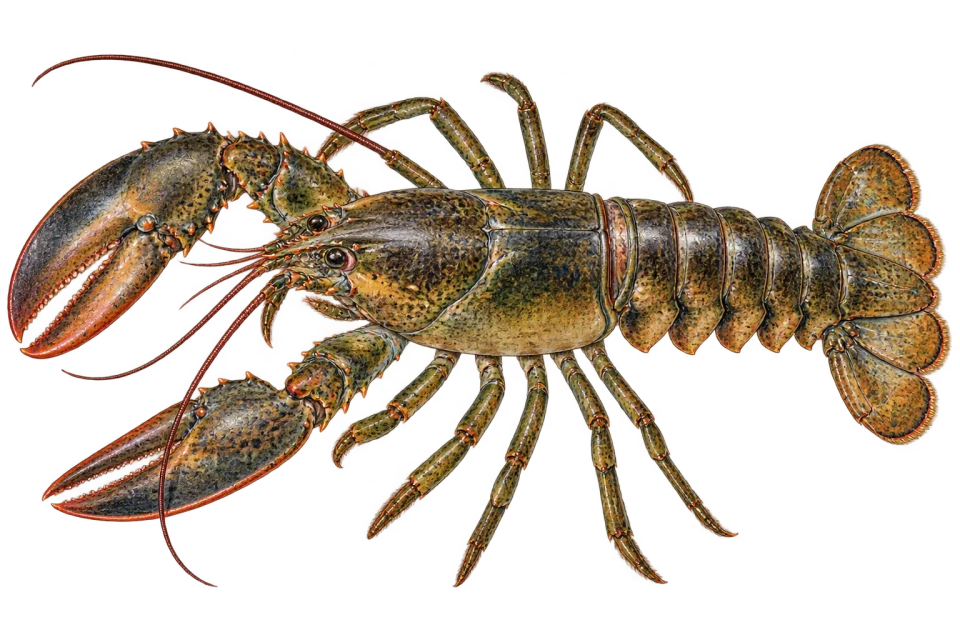
Juvenile lobster

Juvenile lobster

Small American lobster

Match: 2–4 in overall

Seasonal context in full guide

Lures, flies & how to fish them

What to tie on

Profile matches · angling guidance

2–4 in overallOlive-brown lobster flies or compact clawed soft plastics. Keep the body low and the claws visible.

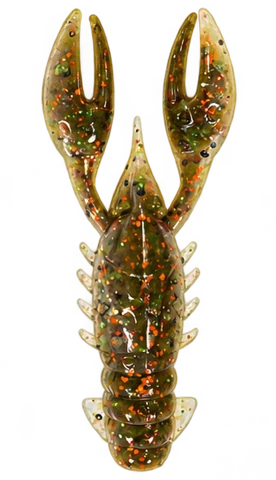
Lure · BOTTOM

Olive glitter crawfish-shaped plastic with two raised claws, without rigging
Z-Man TRD CrawZ

Drew’s Craw · 2.5 in · body only

A compact clawed plastic silhouette for small bottom forage.

Fish it: Rig on a compatible jighead. Keep it low with short draws and pauses around clear patches beside cover.

Profile match · Product reference [53]

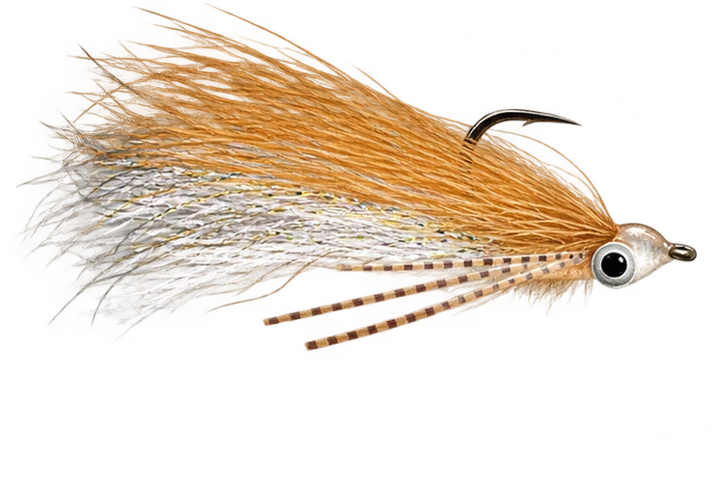
Fly pattern · BOTTOM

Tan-white hair fly with barred rubber legs, weighted eyes and hook point up
RIO’s Webster Crouser

Tan & White · 1/0

A New England bottom-forage pattern with mobile legs and hair.

Fish it: Use a line that reaches the bottom. Make short draws on sand or mud beside the cover, retaining contact.

Profile match · Pattern reference [54]

Match the bait: These are impressionistic bottom-forage choices: the CrawZ is a crawfish-shaped plastic and the Crouser is a mixed-forage fly. Match actual lobster size; do not drag either blindly through crevices.

Habitat, seasonal evidence & sources ↗Back to bait finder ↑
Seasonal evidence & sources
Cinder worms

Cinder worms

Worm hatch · reproductive swarm

Match: 1–3 in to start; match the worms present

Seasonal context in full guide

Lures, flies & how to fish them

What to tie on

Profile matches · angling guidance

1–3 in to start; match the worms presentUse a slim worm fly and adjust its size and red-orange, brown or olive color to the swimmers you see. Cascone recommends varying the retrieve and trying the edges of a dense swarm. RI DEM also describes presenting an artificial on spinning gear with a popping cork.

Fly pattern · TOPWATER

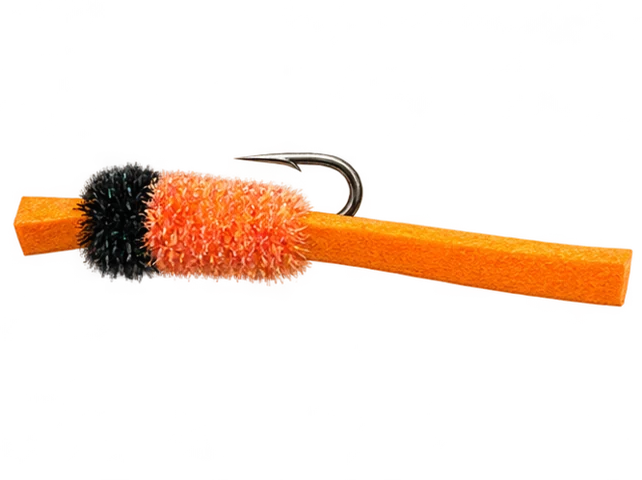
Orange foam strip worm fly with black head collar, peach body and exposed single hook
Umpqua Hines’ Waking Cinder Worm

Orange · 1/0

A floating foam worm for visible surface swarms.

Fish it: Place it among feeding fish and let it sit or creep slowly. Add only an occasional small twitch.

Profile match · Pattern reference [55]

Lure · MID-WATER

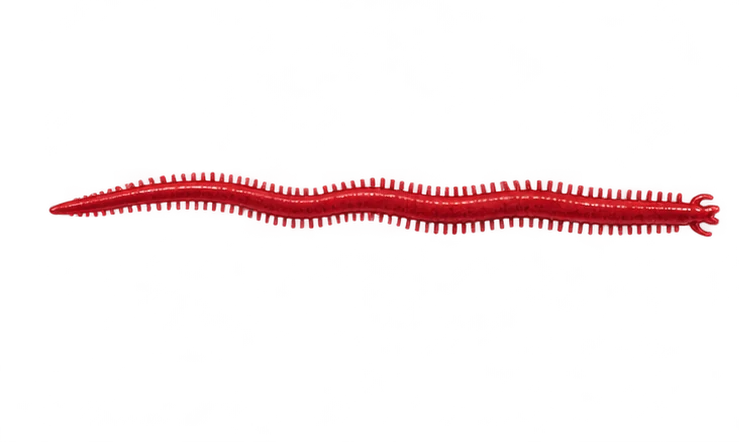
Long red segmented marine-worm plastic with tiny molded side projections
Berkley Gulp! Saltwater Sandworm

Bloody · 6 in · body only

A trimmed marine-worm plastic matches a small swimming cinder worm.

Fish it: Trim the Gulp Sandworm to the worms present and rig on a ⅛-ounce VMC jighead. Work just beneath the surface during a confirmed swarm.

Angling guidance · Moderate [20] · Product reference [56]

Match the bait: Match the worms’ length and color. Confirm swimming worms and feeding fish before using a surface-worm presentation.

On spinning tackle: A casting float can deliver the same light worm fly on spinning tackle. Keep the retrieve slow so it stays in the surface feeding lane.

Habitat, seasonal evidence & sources ↗Back to bait finder ↑
Seasonal evidence & sources
Sandworms & bloodworms

Sandworms & bloodworms

Burrowing marine worms

Match: 3–6 in

Seasonal context in full guide

Lures, flies & how to fish them

What to tie on

Profile matches · angling guidance

3–6 inLong, flexible worm flies or thin soft plastics close to a flat’s bottom. Pattern length is editorial guidance.

Lure · BOTTOM

Long red segmented marine-worm plastic with tiny molded side projections
Berkley Gulp! Saltwater Sandworm

Bloody · 6 in · body only

A long segmented marine-worm plastic.

Fish it: Rig on appropriate hook and weight for the bottom. Use slow short draws and pauses over sand or mud.

Profile match · Product reference [56]

Fly pattern · BOTTOM

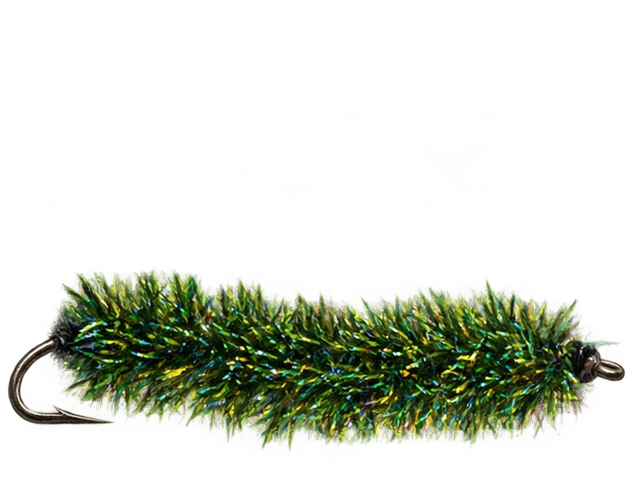
Long olive-green tinsel-chenille worm fly with a single stinger hook
Peaks Ragworm

Olive · #6

A long soft worm-shaped saltwater fly.

Fish it: Use line and countdown to reach the feeding level. Work close to clear sand with short strips and pauses.

Profile match · Pattern reference [57]

Match the bait: For burrowing worms, presentation depends on whether prey is exposed near bottom or swimming; do not assume a cinder-worm surface swarm.

Habitat, seasonal evidence & sources ↗Back to bait finder ↑
Seasonal evidence & sources

Use the habitat and life-cycle notes for this bait; this guide does not yet assign it a seasonal window. Dots do not mean absence.

Explore the full year Regional bait calendar

The year, at a glance.

Documented seasonal windows and resident habitat. Pick a region above to narrow the evidence.

● Documented window− Resident habitat◇ Local reproductive event· Outside window / unresolved

Whole-coast view combines local windows. Open a bait’s profile for the place, life stage and source behind each row.

Swipe the calendar to see all months. Tap a bait name for its full guide.

Striped bass bait calendar. Blank dots mean outside the documented window or unresolved, never absence.
Bait / profile ↙JanFebMarAprMayJunJulAugSepOctNovDec
River herringAlewife · blueback herringJan: Outside the documented window / unresolved; not absenceFeb: Outside the documented window / unresolved; not absenceMar: Local reproductive event — Mullica River adult alewife runApr: Local reproductive event — MA spring adult runs; individual rivers differ; Mullica River adult alewife runMay: Local reproductive event — MA spring adult runs; individual rivers differJun: Local reproductive event — MA spring adult runs; individual rivers differJul: Documented seasonal window — Little Egg Inlet juvenile alewife observationsAug: Documented seasonal window — Little Egg Inlet juvenile alewife observationsSep: Documented seasonal window — Little Egg Inlet juvenile alewife observationsOct: Documented seasonal window — Little Egg Inlet juvenile alewife observationsNov: Outside the documented window / unresolved; not absenceDec: Outside the documented window / unresolved; not absence
Adult menhadenBunker · pogiesJan: Outside the documented window / unresolved; not absenceFeb: Outside the documented window / unresolved; not absenceMar: Documented seasonal window — NJ spring return through fall / early-winter migrationApr: Documented seasonal window — NJ spring return through fall / early-winter migrationMay: Documented seasonal window — Historical Maine arrival late May/June through September; years differ; Historical Massachusetts Bay / southern Gulf season, mid-May–early November; NJ spring return through fall / early-winter migrationJun: Documented seasonal window — Historical Maine arrival late May/June through September; years differ; Historical Massachusetts Bay / southern Gulf season, mid-May–early November; NJ spring return through fall / early-winter migrationJul: Documented seasonal window — Historical Maine arrival late May/June through September; years differ; Historical Massachusetts Bay / southern Gulf season, mid-May–early November; NJ spring return through fall / early-winter migrationAug: Documented seasonal window — Historical Maine arrival late May/June through September; years differ; Historical Massachusetts Bay / southern Gulf season, mid-May–early November; NJ spring return through fall / early-winter migrationSep: Documented seasonal window — Historical Maine arrival late May/June through September; years differ; Historical Massachusetts Bay / southern Gulf season, mid-May–early November; NJ spring return through fall / early-winter migrationOct: Documented seasonal window — Historical Massachusetts Bay / southern Gulf season, mid-May–early November; NJ spring return through fall / early-winter migrationNov: Documented seasonal window — Historical Massachusetts Bay / southern Gulf season, mid-May–early November; NJ spring return through fall / early-winter migrationDec: Documented seasonal window — NJ spring return through fall / early-winter migration
Peanut bunkerYoung-of-year menhadenJan: Outside the documented window / unresolved; not absenceFeb: Outside the documented window / unresolved; not absenceMar: Outside the documented window / unresolved; not absenceApr: Outside the documented window / unresolved; not absenceMay: Outside the documented window / unresolved; not absenceJun: Outside the documented window / unresolved; not absenceJul: Outside the documented window / unresolved; not absenceAug: Documented seasonal window — MA late-season striped bass diet samplesSep: Documented seasonal window — MA late-season striped bass diet samples; NJ fall juvenile estuary exit; months are a seasonal summaryOct: Documented seasonal window — NJ fall juvenile estuary exit; months are a seasonal summaryNov: Documented seasonal window — NJ fall juvenile estuary exit; months are a seasonal summaryDec: Outside the documented window / unresolved; not absence
Sand lanceSand eelsJan: Documented seasonal window — Mid-Atlantic winter/spring shallower distribution; seasonal binsFeb: Documented seasonal window — Mid-Atlantic winter/spring shallower distribution; seasonal binsMar: Documented seasonal window — Stellwagen spring sand-lance food web; Mid-Atlantic winter/spring shallower distribution; seasonal binsApr: Documented seasonal window — Stellwagen spring sand-lance food web; Mid-Atlantic winter/spring shallower distribution; seasonal binsMay: Documented seasonal window — Stellwagen spring sand-lance food web; Mid-Atlantic winter/spring shallower distribution; seasonal binsJun: Outside the documented window / unresolved; not absenceJul: Outside the documented window / unresolved; not absenceAug: Outside the documented window / unresolved; not absenceSep: Outside the documented window / unresolved; not absenceOct: Outside the documented window / unresolved; not absenceNov: Outside the documented window / unresolved; not absenceDec: Documented seasonal window — Mid-Atlantic winter/spring shallower distribution; seasonal bins
Atlantic silversidesSpearingJan: Outside the documented window / unresolved; not absenceFeb: Outside the documented window / unresolved; not absenceMar: Documented seasonal window — Spring–fall shore habitat in the Atlantic review; broad seasonal bins, not exact arrival datesApr: Local reproductive event — Spring–fall shore habitat in the Atlantic review; broad seasonal bins, not exact arrival dates; Salem Harbor local spawning studyMay: Local reproductive event — Spring–fall shore habitat in the Atlantic review; broad seasonal bins, not exact arrival dates; Salem Harbor local spawning studyJun: Local reproductive event — Spring–fall shore habitat in the Atlantic review; broad seasonal bins, not exact arrival dates; Salem Harbor local spawning studyJul: Documented seasonal window — Spring–fall shore habitat in the Atlantic review; broad seasonal bins, not exact arrival datesAug: Documented seasonal window — Spring–fall shore habitat in the Atlantic review; broad seasonal bins, not exact arrival datesSep: Documented seasonal window — Spring–fall shore habitat in the Atlantic review; broad seasonal bins, not exact arrival datesOct: Documented seasonal window — Spring–fall shore habitat in the Atlantic review; broad seasonal bins, not exact arrival datesNov: Documented seasonal window — Spring–fall shore habitat in the Atlantic review; broad seasonal bins, not exact arrival datesDec: Outside the documented window / unresolved; not absence
Bay anchovyRain baitJan: Outside the documented window / unresolved; not absenceFeb: Outside the documented window / unresolved; not absenceMar: Documented seasonal window — Hudson–Raritan spring and late-year catches; historical surveyApr: Documented seasonal window — Hudson–Raritan spring and late-year catches; historical surveyMay: Documented seasonal window — Hudson–Raritan spring and late-year catches; historical surveyJun: Outside the documented window / unresolved; not absenceJul: Outside the documented window / unresolved; not absenceAug: Outside the documented window / unresolved; not absenceSep: Outside the documented window / unresolved; not absenceOct: Documented seasonal window — Hudson–Raritan spring and late-year catches; historical surveyNov: Documented seasonal window — Hudson–Raritan spring and late-year catches; historical surveyDec: Documented seasonal window — Hudson–Raritan spring and late-year catches; historical survey
Atlantic herringSea herringJan: Documented seasonal window — Hudson–Raritan winter/spring catchesFeb: Documented seasonal window — Hudson–Raritan winter/spring catchesMar: Documented seasonal window — Hudson–Raritan winter/spring catchesApr: Documented seasonal window — Hudson–Raritan winter/spring catchesMay: Outside the documented window / unresolved; not absenceJun: Outside the documented window / unresolved; not absenceJul: Outside the documented window / unresolved; not absenceAug: Local reproductive event — Gulf of Maine spawning progresses geographicallySep: Local reproductive event — Gulf of Maine spawning progresses geographicallyOct: Local reproductive event — Gulf of Maine spawning progresses geographically; Nantucket Shoals spawning, offshore contextNov: Local reproductive event — Gulf of Maine spawning progresses geographically; Nantucket Shoals spawning, offshore contextDec: Outside the documented window / unresolved; not absence
Atlantic mackerelBoston mackerelJan: Outside the documented window / unresolved; not absenceFeb: Outside the documented window / unresolved; not absenceMar: Outside the documented window / unresolved; not absenceApr: Documented seasonal window — NJ / Long Island coastal movementMay: Documented seasonal window — NJ / Long Island coastal movementJun: Documented seasonal window — Gulf of Maine seasonal movementJul: Documented seasonal window — Gulf of Maine seasonal movementAug: Outside the documented window / unresolved; not absenceSep: Outside the documented window / unresolved; not absenceOct: Outside the documented window / unresolved; not absenceNov: Outside the documented window / unresolved; not absenceDec: Outside the documented window / unresolved; not absence
Striped mulletFinger mulletJan: Outside the documented window / unresolved; not absenceFeb: Outside the documented window / unresolved; not absenceMar: Outside the documented window / unresolved; not absenceApr: Outside the documented window / unresolved; not absenceMay: Outside the documented window / unresolved; not absenceJun: Outside the documented window / unresolved; not absenceJul: Outside the documented window / unresolved; not absenceAug: Outside the documented window / unresolved; not absenceSep: Documented seasonal window — NJ agency account: September–October back-bay exit and southward beach movementOct: Documented seasonal window — NJ agency account: September–October back-bay exit and southward beach movementNov: Outside the documented window / unresolved; not absenceDec: Outside the documented window / unresolved; not absence
Rainbow smeltSea-run smeltJan: Outside the documented window / unresolved; not absenceFeb: Outside the documented window / unresolved; not absenceMar: Local reproductive event — Coastal MA Gulf of Maine survey: March–May spawning; usually mid-March–mid-MayApr: Local reproductive event — Coastal MA Gulf of Maine survey: March–May spawning; usually mid-March–mid-May; Maine coastal-stream spawningMay: Local reproductive event — Coastal MA Gulf of Maine survey: March–May spawning; usually mid-March–mid-May; Maine coastal-stream spawningJun: Outside the documented window / unresolved; not absenceJul: Outside the documented window / unresolved; not absenceAug: Outside the documented window / unresolved; not absenceSep: Outside the documented window / unresolved; not absenceOct: Outside the documented window / unresolved; not absenceNov: Outside the documented window / unresolved; not absenceDec: Outside the documented window / unresolved; not absence
MummichogKillies · marsh minnowsJan: Resident habitat — Resident tidal-marsh habitat; winter access changesFeb: Resident habitat — Resident tidal-marsh habitat; winter access changesMar: Resident habitat — Resident tidal-marsh habitat; winter access changesApr: Resident habitat — Resident tidal-marsh habitat; winter access changesMay: Resident habitat — Resident tidal-marsh habitat; winter access changesJun: Resident habitat — Resident tidal-marsh habitat; winter access changesJul: Resident habitat — Resident tidal-marsh habitat; winter access changesAug: Resident habitat — Resident tidal-marsh habitat; winter access changesSep: Resident habitat — Resident tidal-marsh habitat; winter access changesOct: Resident habitat — Resident tidal-marsh habitat; winter access changesNov: Resident habitat — Resident tidal-marsh habitat; winter access changesDec: Resident habitat — Resident tidal-marsh habitat; winter access changes
ButterfishAtlantic butterfishJan: Outside the documented window / unresolved; not absenceFeb: Outside the documented window / unresolved; not absenceMar: Outside the documented window / unresolved; not absenceApr: Outside the documented window / unresolved; not absenceMay: Outside the documented window / unresolved; not absenceJun: Documented seasonal window — Summer northward / inshore movement; broad seasonal summaryJul: Documented seasonal window — Summer northward / inshore movement; broad seasonal summaryAug: Documented seasonal window — Summer northward / inshore movement; broad seasonal summarySep: Outside the documented window / unresolved; not absenceOct: Outside the documented window / unresolved; not absenceNov: Outside the documented window / unresolved; not absenceDec: Outside the documented window / unresolved; not absence
American eelYellow eel · silver eelJan: Resident habitat — Resident yellow-eel habitat; not a monthly activity forecastFeb: Resident habitat — Resident yellow-eel habitat; not a monthly activity forecastMar: Resident habitat — Resident yellow-eel habitat; not a monthly activity forecastApr: Resident habitat — Resident yellow-eel habitat; not a monthly activity forecastMay: Resident habitat — Resident yellow-eel habitat; not a monthly activity forecastJun: Resident habitat — Resident yellow-eel habitat; not a monthly activity forecastJul: Resident habitat — Resident yellow-eel habitat; not a monthly activity forecastAug: Documented seasonal window — Resident yellow-eel habitat; not a monthly activity forecast; Maine DMR: mature silver-eel downstream migration, August–NovemberSep: Documented seasonal window — Resident yellow-eel habitat; not a monthly activity forecast; Maine DMR: mature silver-eel downstream migration, August–NovemberOct: Documented seasonal window — Resident yellow-eel habitat; not a monthly activity forecast; Maine DMR: mature silver-eel downstream migration, August–NovemberNov: Documented seasonal window — Resident yellow-eel habitat; not a monthly activity forecast; Maine DMR: mature silver-eel downstream migration, August–NovemberDec: Resident habitat — Resident yellow-eel habitat; not a monthly activity forecast
Longfin squidSquidJan: Outside the documented window / unresolved; not absenceFeb: Outside the documented window / unresolved; not absenceMar: Documented seasonal window — NOAA shelf review: inshore March–October, location variesApr: Documented seasonal window — NOAA shelf review: inshore March–October, location variesMay: Documented seasonal window — NOAA shelf review: inshore March–October, location variesJun: Documented seasonal window — NOAA shelf review: inshore March–October, location variesJul: Documented seasonal window — NOAA shelf review: inshore March–October, location variesAug: Documented seasonal window — NOAA shelf review: inshore March–October, location variesSep: Documented seasonal window — NOAA shelf review: inshore March–October, location variesOct: Documented seasonal window — NOAA shelf review: inshore March–October, location variesNov: Outside the documented window / unresolved; not absenceDec: Outside the documented window / unresolved; not absence
Atlantic rock crabRock crabJan: Documented seasonal window — Hudson–Raritan cooler-season trawl concentrationsFeb: Documented seasonal window — Hudson–Raritan cooler-season trawl concentrationsMar: Documented seasonal window — Hudson–Raritan cooler-season trawl concentrationsApr: Documented seasonal window — Hudson–Raritan cooler-season trawl concentrationsMay: Documented seasonal window — Hudson–Raritan cooler-season trawl concentrationsJun: Documented seasonal window — MA bass diet sampling window; not an abundance peakJul: Documented seasonal window — MA bass diet sampling window; not an abundance peakAug: Documented seasonal window — MA bass diet sampling window; not an abundance peakSep: Documented seasonal window — MA bass diet sampling window; not an abundance peakOct: Documented seasonal window — Hudson–Raritan cooler-season trawl concentrationsNov: Documented seasonal window — Hudson–Raritan cooler-season trawl concentrationsDec: Documented seasonal window — Hudson–Raritan cooler-season trawl concentrations
European green crabGreen crabJan: Resident habitat — Resident shallow coastal habitat; not equal monthly exposureFeb: Resident habitat — Resident shallow coastal habitat; not equal monthly exposureMar: Resident habitat — Resident shallow coastal habitat; not equal monthly exposureApr: Resident habitat — Resident shallow coastal habitat; not equal monthly exposureMay: Resident habitat — Resident shallow coastal habitat; not equal monthly exposureJun: Resident habitat — Resident shallow coastal habitat; not equal monthly exposureJul: Resident habitat — Resident shallow coastal habitat; not equal monthly exposureAug: Resident habitat — Resident shallow coastal habitat; not equal monthly exposureSep: Resident habitat — Resident shallow coastal habitat; not equal monthly exposureOct: Resident habitat — Resident shallow coastal habitat; not equal monthly exposureNov: Resident habitat — Resident shallow coastal habitat; not equal monthly exposureDec: Resident habitat — Resident shallow coastal habitat; not equal monthly exposure
Lady crabCalico crabJan: Outside the documented window / unresolved; not absenceFeb: Outside the documented window / unresolved; not absenceMar: Outside the documented window / unresolved; not absenceApr: Documented seasonal window — Hudson–Raritan spring through fall/December catchesMay: Documented seasonal window — Hudson–Raritan spring through fall/December catchesJun: Documented seasonal window — Hudson–Raritan spring through fall/December catchesJul: Documented seasonal window — Hudson–Raritan spring through fall/December catchesAug: Documented seasonal window — Hudson–Raritan spring through fall/December catchesSep: Documented seasonal window — Hudson–Raritan spring through fall/December catchesOct: Documented seasonal window — Hudson–Raritan spring through fall/December catchesNov: Documented seasonal window — Hudson–Raritan spring through fall/December catchesDec: Documented seasonal window — Hudson–Raritan spring through fall/December catches
Blue crabJuvenile blue crabJan: Outside the documented window / unresolved; not absenceFeb: Outside the documented window / unresolved; not absenceMar: Outside the documented window / unresolved; not absenceApr: Outside the documented window / unresolved; not absenceMay: Outside the documented window / unresolved; not absenceJun: Documented seasonal window — NJ marsh-creek study sampling season; forage documentedJul: Documented seasonal window — NJ marsh-creek study sampling season; forage documentedAug: Documented seasonal window — NJ marsh-creek study sampling season; forage documentedSep: Documented seasonal window — NJ marsh-creek study sampling season; forage documentedOct: Documented seasonal window — NJ marsh-creek study sampling season; forage documentedNov: Outside the documented window / unresolved; not absenceDec: Outside the documented window / unresolved; not absence
Sand shrimpSevenspine bay shrimpJan: Documented seasonal window — Raritan bass diets: January, April and November samplesFeb: Outside the documented window / unresolved; not absenceMar: Outside the documented window / unresolved; not absenceApr: Documented seasonal window — Raritan bass diets: January, April and November samplesMay: Documented seasonal window — MA estuary diets sampled May–OctoberJun: Documented seasonal window — MA estuary diets sampled May–OctoberJul: Documented seasonal window — MA estuary diets sampled May–OctoberAug: Documented seasonal window — MA estuary diets sampled May–OctoberSep: Documented seasonal window — Sheepscot, Kennebec and Damariscotta: juvenile abundance peaked in September in the 2004–2005 study; MA estuary diets sampled May–OctoberOct: Documented seasonal window — MA estuary diets sampled May–OctoberNov: Documented seasonal window — Raritan bass diets: January, April and November samplesDec: Outside the documented window / unresolved; not absence
Grass shrimpCommon grass shrimpJan: Outside the documented window / unresolved; not absenceFeb: Outside the documented window / unresolved; not absenceMar: Outside the documented window / unresolved; not absenceApr: Outside the documented window / unresolved; not absenceMay: Outside the documented window / unresolved; not absenceJun: Documented seasonal window — NJ marsh-creek diet study seasonJul: Documented seasonal window — NJ marsh-creek diet study seasonAug: Documented seasonal window — NJ marsh-creek diet study seasonSep: Documented seasonal window — NJ marsh-creek diet study seasonOct: Documented seasonal window — NJ marsh-creek diet study seasonNov: Outside the documented window / unresolved; not absenceDec: Outside the documented window / unresolved; not absence
Mysid shrimpOpossum shrimpJan: Outside the documented window / unresolved; not absenceFeb: Outside the documented window / unresolved; not absenceMar: Outside the documented window / unresolved; not absenceApr: Outside the documented window / unresolved; not absenceMay: Documented seasonal window — Damariscotta River: emergence begins late May or June and ends in November; N. americana, local study contextJun: Documented seasonal window — Damariscotta River: emergence begins late May or June and ends in November; N. americana, local study contextJul: Documented seasonal window — Damariscotta River: emergence begins late May or June and ends in November; N. americana, local study contextAug: Documented seasonal window — Damariscotta River: emergence begins late May or June and ends in November; N. americana, local study contextSep: Documented seasonal window — Damariscotta River: emergence begins late May or June and ends in November; N. americana, local study contextOct: Documented seasonal window — Damariscotta River: emergence begins late May or June and ends in November; N. americana, local study contextNov: Documented seasonal window — Damariscotta River: emergence begins late May or June and ends in November; N. americana, local study contextDec: Outside the documented window / unresolved; not absence
Juvenile lobsterSmall American lobsterJan: Resident habitat — Bottom-cover habitat; regional abundance differs greatlyFeb: Resident habitat — Bottom-cover habitat; regional abundance differs greatlyMar: Resident habitat — Bottom-cover habitat; regional abundance differs greatlyApr: Resident habitat — Bottom-cover habitat; regional abundance differs greatlyMay: Resident habitat — Bottom-cover habitat; regional abundance differs greatlyJun: Resident habitat — Bottom-cover habitat; regional abundance differs greatlyJul: Resident habitat — Bottom-cover habitat; regional abundance differs greatlyAug: Resident habitat — Bottom-cover habitat; regional abundance differs greatlySep: Resident habitat — Bottom-cover habitat; regional abundance differs greatlyOct: Resident habitat — Bottom-cover habitat; regional abundance differs greatlyNov: Resident habitat — Bottom-cover habitat; regional abundance differs greatlyDec: Resident habitat — Bottom-cover habitat; regional abundance differs greatly
Cinder wormsWorm hatch · reproductive swarmJan: Outside the documented window / unresolved; not absenceFeb: Outside the documented window / unresolved; not absenceMar: Outside the documented window / unresolved; not absenceApr: Local reproductive event — RI spring angling window: chiefly May, sometimes late April–JuneMay: Local reproductive event — RI spring angling window: chiefly May, sometimes late April–JuneJun: Local reproductive event — RI spring angling window: chiefly May, sometimes late April–June; Woods Hole Nereis limbata: June–September evening reproduction in 1911–1912; separate from the RI spring eventJul: Local reproductive event — Woods Hole Nereis limbata: June–September evening reproduction in 1911–1912; separate from the RI spring eventAug: Local reproductive event — Woods Hole Nereis limbata: June–September evening reproduction in 1911–1912; separate from the RI spring eventSep: Local reproductive event — Woods Hole Nereis limbata: June–September evening reproduction in 1911–1912; separate from the RI spring eventOct: Outside the documented window / unresolved; not absenceNov: Outside the documented window / unresolved; not absenceDec: Outside the documented window / unresolved; not absence
Sandworms & bloodwormsBurrowing marine wormsJan: Outside the documented window / unresolved; not absenceFeb: Outside the documented window / unresolved; not absenceMar: Outside the documented window / unresolved; not absenceApr: Outside the documented window / unresolved; not absenceMay: Outside the documented window / unresolved; not absenceJun: Outside the documented window / unresolved; not absenceJul: Outside the documented window / unresolved; not absenceAug: Outside the documented window / unresolved; not absenceSep: Outside the documented window / unresolved; not absenceOct: Outside the documented window / unresolved; not absenceNov: Outside the documented window / unresolved; not absenceDec: Outside the documented window / unresolved; not absence

A filled month is not an abundance peak. “Resident” describes habitat occupancy, not equal exposure to bass all year. A region filter narrows the evidence, not the species’ geographic range. Months outside a cited window remain unresolved.

Learn the bait Habitat, biology & sources

The field guide.

24 bait profiles

Identify the bait, then open its guide for named lures and fly patterns, reference illustrations and clear starting presentations. Match the size, depth and movement of the bait in front of you.

01 / BaitfishIllustration of River herringAlosa pseudoharengus / A. aestivalis

River herring

Alewife · blueback herring

One name. Two species. Very different spring and fall sizes.

Size in context
Adults roughly 10–12 in; juveniles much smaller.
Water temperature
~51°F alewife · ~57°F blueback
Massachusetts freshwater spawning cues. These are not ocean arrival temperatures or bass feeding optima.Massachusetts DMF River Herring Viewing Guide
Lures, flies & how to fish them

What to tie on

Profile matches · angling guidance

2–4 in juvenile / 7–10 in adultSilver-sided streamers and paddletails. Change the silhouette with life stage instead of fishing an adult-sized pattern all year.

Lure · MID-WATER

Olive integrated-weight paddletail with single exposed top hook
Hogy Protail Paddle

Olive · 3.5 in · 1 oz

A compact juvenile-baitfish profile.

Fish it: Swim across the seam beside the outflow. Adjust jig weight to hold the feeding depth.

Profile match · Product reference [21]

Fly pattern · MID-WATER

Sparse blue-silver resin-bodied fly with single hook
Umpqua Surf Candy

Light Blue · 1/0

A sparse silver-sided fly for small outbound fish.

Fish it: Match the dressing to the young fish you see. Strip with pauses through the seam.

Profile match · Pattern reference [22]

Fly pattern · BOTTOM

Popovics Herring Hollow Fleye

Suggested blue / white adult-herring tie · hook size not specified

Hollow-tied bucktail creates a broad, translucent adult-herring profile.

Fish it: Use a sinking line to reach deeper structure, then retrieve with moderate strips. Downsize the tie for juveniles.

Angling guidance · Moderate [1] [2] · Pattern reference [1]

Match the bait: Match the life stage: small outbound fall fish need a smaller offering than spring adults. For larger adult-sized bait, consider a longer minnow plug or Deceiver.

Where to look

River mouths and freshwater connections in spring. Later, look for small outbound fish at estuary exits.

Spawning & life cycle

Spring, in freshwater. The Mullica River study documented adult alewife mainly in March–April; Maine and Massachusetts runs occur later.

Calendar evidence

A fall juvenile movement is not a second adult spawning run.

Sources & scope

↑ Back to calendar
02 / BaitfishIllustration of Adult menhadenBrevoortia tyrannus

Adult menhaden

Bunker · pogies

The broad, oily baitfish behind the big-bait silhouette.

Size in context
Up to 15 in; this is an adult maximum.
Water temperature
~50°F and warmer: historical spring arrival
The NOAA Gulf of Maine review summarizes spring appearances after coastal water reached about 10°C. A historical regional association, not a universal threshold or a guarantee of schools.Munroe 2000 · Gulf of Maine clupeoid fishes, pp. 149–150
Lures, flies & how to fish them

What to tie on

Profile matches · angling guidance

6–10 inFull-bodied plugs, large paddletails and bunker flies. Match body depth as well as length.

Lure · TOPWATER

Tapered white pencil popper with red head and two trebles
Gibbs Pencil Popper

Redhead · 2¾ oz

A surface option when large bunker and feeding fish are showing.

Fish it: Reel slowly while working the rod tip rhythmically to make the plug dance.

Profile match · Product reference [23]

Lure · TOPWATER

Black-purple wooden swimmer with metal pan lip and dressed tail hook
Gibbs Danny Surface Swimmer

Black / Purple · 2¼ oz · dressed-tail example

A fuller swimming profile for bait high in the water.

Fish it: Use a steady surface swim; let current work the plug. Change tools if it rolls or loses its swim.

Profile match · Product reference [24]

Fly pattern · MID-WATER

Blue-and-white hair-and-feather streamer with barred feather tail
Umpqua Big Fish Deceiver

Blue / White · 3/0

A full, long baitfish silhouette.

Fish it: Cast beside the school, settle to the feeding depth and strip with pauses.

Profile match · Pattern reference [25]

Fly pattern · TOPWATER

Joe Blados Crease Fly

Blue / Silver · 3/0

A tall reflective foam body suggests bunker struggling at the surface.

Fish it: Use a floating line beside visible bunker schools. Pop or skate with short strips, adjusting pace to feeding fish.

Angling guidance · Moderate [3] · Pattern reference [26]

Fly pattern · MID-WATER

Bob Popovics Beast Fleye

Menhaden dressing · 12 in example · hook size not specified

An extended, deep bucktail silhouette matches large adult bunker.

Fish it: Deliver ahead of feeding bass at a school’s edge. Begin with a dead drift or slow retrieve and adjust to their response.

Angling guidance · Strong [1] [3] [4] · Pattern reference [4]

Match the bait: Match body depth and the actual bunker present; the lure’s weight is a tackle specification, not a prey-size estimate.

Where to look

Coastal schools, bays and estuary approaches. Adults move along the coast; small juveniles use estuarine nurseries.

Spawning & life cycle

Coastwide spawning peaks December–February, but reproduction also occurs farther north in warmer months. The winter peak is not the only spawning period.

Calendar evidence

New Jersey’s spring arrival and fall departure should not be reduced to a Massachusetts late-summer calendar.

Sources & scope

↑ Back to calendar
03 / BaitfishIllustration of Peanut bunkerBrevoortia tyrannus · juvenile

Peanut bunker

Young-of-year menhaden

Same species as a pogy. A completely different-sized meal.

Size in context
About 1–6 in in late-season Massachusetts bass diets (30–145 mm).
Water temperature
77°F → 54°F cooling
Seine catches declined across this cooling interval in one Rhode Island pond in 1971. Historical observation, not a departure cutoff.Thomas A. Munroe: Temporal distribution and relative abundance of fish in Nannaquaket Pond, R.I.
Lures, flies & how to fish them

What to tie on

Profile matches · angling guidance

2–4 inShort, deep-bodied flies, small swimmers or compact paddletails. A skinny sand-eel imitation has a different profile even at the same length.

Lure · MID-WATER

White open-mouth jighead, red thread collar, white bucktail and hackle
OG Jigs Smiling Bill

White bucktail with hackle

A fuller dressed jig suggests a short, deep-bodied baitfish.

Fish it: Swim beside or beneath the school. Choose weight to hold depth and keep the jig above rocks.

Profile match · Product reference [27]

Fly pattern · MID-WATER

Deep synthetic olive-white baitfish fly with yellow-ring eye and single hook
EP Peanut Butter

Olive / Polar · 2/0

A broad synthetic profile for juvenile menhaden.

Fish it: Strip along the school’s edge; let the fly settle if bass are feeding below it.

Angling guidance · Moderate [5] [6] · Pattern reference [28]

Fly pattern · TOPWATER

Gartside Baby Bunker Gurgler

Blue / White · #2 or #4 saltwater hook

A wide floating body suggests a flipping peanut bunker.

Fish it: Use a floating line over surface-feeding fish. Alternate short strips, pauses and gentle twitches.

Angling guidance · Moderate [7] [8] · Pattern reference [7]

Where to look

Estuary nurseries, bays and seaward routes. Young fish leave estuaries in fall.

Spawning & life cycle

These are juveniles, not a separate spawning species. The adults’ main coastwide spawning peak is in winter.

Calendar evidence

The August–September calendar row is a Massachusetts diet-study window, not a measured coastwide abundance peak.

Sources & scope

↑ Back to calendar
04 / BaitfishIllustration of Sand lanceAmmodytes spp.

Sand lance

Sand eels

Think sand beneath the school, not just birds above it.

Size in context
Commonly around 4–6 in in NOAA’s Stellwagen account.
Water temperature
36–45°F / 45–59°F
Northern sand lance occurred most frequently at 2–7°C in winter/spring and 7–15°C in summer/fall bottom trawls. Not a surface-temperature preference.Nelson & Ross 1991: Biology and population changes of northern sand lance
Lures, flies & how to fish them

What to tie on

Profile matches · angling guidance

3–6 inVery slim flies, needlefish and thin soft plastics. Keep the body narrow and consider the sand-to-water-column transition.

Lure · MID-WATER

Slim green-and-white needlefish plug, belly treble and tail single hook
Super Strike Super ’N’ Fish

Black / Chartreuse / White · slow sink

A long, thin profile for sand-eel water.

Fish it: Start with a slow steady retrieve. Adjust countdown and sink rate for depth and sweep.

Profile match · Product reference [29]

Lure · BOTTOM

Chrome diamond jig with swivel and pink tube over a single hook
Uncle Mo’s A27 Diamond Jig

Pink tube · 3 oz

A tin-and-tube option for reach or a presentation near sand.

Fish it: Work near the sand and keep fishing into the wash. Use a lighter jig when it holds the same depth.

Profile match · Product reference [30]

Fly pattern · MID-WATER

Sparse blue-silver resin-bodied fly with single hook
Umpqua Surf Candy

Light Blue · 1/0

A sparse, narrow streamer profile.

Fish it: Choose dressing length to match the bait. Get the line to the feeding level, then strip steadily with pauses.

Profile match · Pattern reference [22]

Where to look

Sandy seabeds where fish can bury. Mid-Atlantic survey distributions shifted from shallower winter/spring water toward deeper summer/fall water.

Spawning & life cycle

Northern sand lance spawn in late fall and winter. “Sand eel” covers more than one species.

Calendar evidence

The calendar highlights different contexts: Stellwagen’s spring feeding web and the Mid-Atlantic’s shallower winter/spring distribution.

Sources & scope

↑ Back to calendar
05 / BaitfishIllustration of Atlantic silversidesMenidia menidia

Atlantic silversides

Spearing

A thin silver stripe. A small mouth. A nearshore staple.

Size in context
Up to about 5.5 in; many shoreline schools are smaller.
Water temperature
48–70°F spawning observations
9–21°C during a Salem Harbor spawning study, late April–June. A local reproductive range, not a coastwide feeding window.Conover & Kynard 1984: Field and laboratory observations of spawning periodicity and behavior
Lures, flies & how to fish them

What to tie on

Profile matches · angling guidance

2–4 inSparse translucent flies and slender silver soft plastics. Keep the head small; anchovies have a noticeably larger mouth.

Lure · MID-WATER

Compact silver baitfish metal jig with rear inline single hook
Hogy Peanut ’Chovy Jig

Chovy Silverside · 2 in · ⅜ oz

A compact silver profile when the school is around this size.

Fish it: Swim through the edge of the school; adjust countdown before changing the lure.

Profile match · Product reference [31]

Fly pattern · MID-WATER

Sparse blue-silver resin-bodied fly with single hook
Umpqua Surf Candy

Light Blue · 1/0

A translucent, narrow fly for spearing.

Fish it: Use steady short strips and pauses. Keep the dressing sparse and match the actual bait length.

Profile match · Pattern reference [22]

Fly pattern · MID-WATER

Ray Bondorew’s Ray’s Fly

Olive / Yellow / White · suggested #2

Sparse layered bucktail suggests a slender olive-backed silverside.

Fish it: Use an unweighted tie near the bait’s level. Try restrained strips or a controlled drift through current.

Angling guidance · Moderate [9] [10] · Pattern reference [9]

Fly pattern · BOTTOM

Sparse chartreuse-white bucktail fly, dumbbell eyes and hook point up
Orvis Clouser Minnow

Chartreuse / White

A sparse weighted bucktail suggests silversides near bottom.

Fish it: Let the fly settle, then strip with pauses that let it drop. Choose line density and eye weight for the feeding level.

Angling guidance · Moderate [11] [12] · Pattern reference [32]

Where to look

Very shallow shorelines, bay margins and tidal creeks. Winter movement into deeper or offshore water changes shoreline availability.

Spawning & life cycle

Spring into summer, varying with latitude. Eggs attach in intertidal habitat.

Calendar evidence

A winter offshore movement does not mean the species vanishes from the region.

Sources & scope

↑ Back to calendar
06 / BaitfishIllustration of Bay anchovyAnchoa mitchilli

Bay anchovy

Rain bait

Sometimes the right change is going much smaller.

Size in context
Up to 4 in; a large mouth on a translucent body.
Water temperature
No local trigger established
No Northeast nearshore arrival or feeding threshold is supplied by these sources.
Lures, flies & how to fish them

What to tie on

Profile matches · angling guidance

1–3 inTiny translucent baitfish flies, sparse epoxy-style patterns or small soft plastics. Prioritize the small outline over a large splash.

Lure · MID-WATER

Compact silver baitfish metal jig with rear inline single hook
Hogy Peanut ’Chovy Jig

Chovy Silverside · 2 in · ⅜ oz

A small metal that can reach feeding fish when bait is near 2 inches.

Fish it: Try a steady swim with brief pauses. Account for the jig sinking during each pause.

Profile match · Product reference [31]

Fly pattern · MID-WATER

Sparse blue-silver resin-bodied fly with single hook
Umpqua Surf Candy

Light Blue · 1/0

A sparse translucent profile for rain bait.

Fish it: Choose a shorter tie when the anchovies are tiny. Use short strips and pauses through the feeding lane.

Profile match · Pattern reference [22]

Lure · MID-WATER

Fish Snax Albie Snax

White · 5 in · approximately ½ oz before hook

A slender darting plastic for stripers feeding on bay anchovies.

Fish it: Rig weightless on a suitable swimbait hook. Retrieve slowly with subtle twitches and occasional pauses; this is a larger impression of the bait.

Angling guidance · Moderate [13] · Product reference [33]

Match the bait: Remove bulk before adding more action. Very small anchovies may call for a smaller fly than the example shown.

Where to look

Estuarine schools and bay channels. Hudson–Raritan trawls documented substantial spring and late-year catches.

Spawning & life cycle

Warm-season spawner. The Chesapeake agency guide gives May–September, with a July peak; that is not a Maine or New Jersey spawning schedule.

Calendar evidence

“Rain bait” can describe several tiny schooling fish. Identify the bait before assigning a species.

Sources & scope

↑ Back to calendar
07 / BaitfishIllustration of Atlantic herringClupea harengus

Atlantic herring

Sea herring

Sea herring stay saltwater. River herring do not.

Size in context
Up to 14 in.
Water temperature
No local trigger established
No Northeast nearshore arrival or feeding threshold is supplied by these sources.
Lures, flies & how to fish them

What to tie on

Profile matches · angling guidance

3–7 inSilver streamers, swimming plugs and paddletails with a darker back. Size to the school, not the adult maximum.

Lure · MID-WATER

Gold darter with solid slanted face, belly treble and tail single hook
Super Strike Zig Zag Darter

All Gold · 2⅜ oz

A baitfish profile that works with moving water.

Fish it: Get it swimming, maintain contact and retrieve slowly to moderately; let the plug supply the action.

Profile match · Product reference [34]

Fly pattern · MID-WATER

Blue-and-white hair-and-feather streamer with barred feather tail
Umpqua Big Fish Deceiver

Blue / White · 3/0

A fuller silver-sided streamer profile.

Fish it: Size the dressing to the school. Use line and countdown to reach feeding fish, then strip with pauses.

Profile match · Pattern reference [25]

Fly pattern · BOTTOM

Popovics Herring Hollow Fleye

Suggested blue / white adult-herring tie · hook size not specified

Hollow-tied bucktail creates a broad, translucent adult-herring profile.

Fish it: Use a sinking line to reach deeper structure, then retrieve with moderate strips. Downsize the tie for juveniles.

Angling guidance · Moderate [1] [2] · Pattern reference [1]

Where to look

Coastal and shelf schools. Young fish use coastal waters; adult spawning grounds include the Gulf of Maine and offshore banks.

Spawning & life cycle

Starts around August in eastern Maine; October–November in the southern Gulf of Maine, Georges Bank and Nantucket Shoals.

Calendar evidence

Raritan’s historical winter/spring pattern is different from a northern fall spawning calendar.

Sources & scope

↑ Back to calendar
08 / BaitfishIllustration of Atlantic mackerelScomber scombrus

Atlantic mackerel

Boston mackerel

The spring bait in Jersey can be the summer bait in Maine.

Size in context
Adults can reach about 16.5 in; small “tinker” mackerel are a juvenile size class.
Water temperature
41–55°F spring · 50–57°F summer
Adult bottom-trawl concentrations in the NOAA habitat review; fall 48–54°F. These are seasonal survey observations, not a live arrival alarm.Studholme et al. 1999: Atlantic mackerel EFH, NOAA TM NMFS-NE-141
Lures, flies & how to fish them

What to tie on

Profile matches · angling guidance

4–8 inStreamlined swimmers, paddletails or mackerel flies with a darker barred back. Watch the actual bait size.

Lure · MID-WATER

Slender barred blue-silver swimmer with clear lip and two trebles
Daiwa Salt Pro Minnow Floating

Blue Mackerel · 5.9 in

A streamlined swimmer in a verified mackerel finish.

Fish it: For small mackerel high in the water, start with a steady swim. Try a short twitch and return to that pace.

Profile match · Product reference [35]

Fly pattern · MID-WATER

Blue-and-white hair-and-feather streamer with barred feather tail
Umpqua Big Fish Deceiver

Blue / White · 3/0

A blue-white profile for appropriately sized mackerel.

Fish it: Match the school’s length; use line and countdown to reach its depth.

Profile match · Pattern reference [25]

Fly pattern · BOTTOM

Articulated Mackerel Hollow Fleye

Olive grizzly / light bucktail · 10 in example · hook size not specified

A large articulated body and barred upper wing suggest adult mackerel.

Fish it: Use a sinking line around deeper rocks and structure. Count down before retrieving; choose a smaller fly for tinker mackerel.

Angling guidance · Moderate [1] · Pattern reference [1]

Match the bait: Match the mackerel present rather than the species’ adult maximum.

Where to look

Open coastal water and inlet approaches. NOAA’s habitat review places fish off NJ/Long Island in late April–May and in the Gulf of Maine in June–July.

Spawning & life cycle

Spring into summer as spawning progresses north; southern waters are earlier.

Calendar evidence

An ocean-schooling fish should not inherit a back-bay calendar.

Sources & scope

↑ Back to calendar
09 / BaitfishIllustration of Striped mulletMugil cephalus

Striped mullet

Finger mullet

A fall movement worth watching at Jersey’s bay mouths and beaches.

Size in context
Adults can be large; northern coastal fish are usually juveniles.
Water temperature
No local trigger established
No Northeast nearshore arrival or feeding threshold is supplied by these sources.
Lures, flies & how to fish them

What to tie on

Profile matches · angling guidance

3–5 inRound-bodied surface swimmers and mullet flies. Suggest a blunt head and substantial profile.

Lure · TOPWATER

Black-purple wooden swimmer with metal pan lip and dressed tail hook
Gibbs Danny Surface Swimmer

Black / Purple · 2¼ oz · dressed-tail example

A substantial profile for mullet traveling near the surface.

Fish it: Maintain a steady surface swim. Cover the shoreline lane when mullet are moving close.

Profile match · Product reference [24]

Fly pattern · MID-WATER

Full olive-white synthetic baitfish fly with silver-ring eye
EP Finger Mullet

Standard · 2/0

A fuller mullet-shaped synthetic fly.

Fish it: Strip and pause along the same lane while keeping contact with the fly.

Profile match · Pattern reference [36]

Fly pattern · TOPWATER

Bob Popovics Bob’s Banger

Silver · 4/0 · approximately 4¼ in

A substantial surface profile suggests finger mullet high in the water.

Fish it: Use a floating line and work it with the line hand. Begin with small continuous pops along the surface feeding lane.

Angling guidance · Moderate [14] [6] · Pattern reference [37]

Fly pattern · MID-WATER

Bob Popovics Siliclone Mullet

Suggested white or blue / white · 4–6 in · hook size not specified

A sculpted bulky head reproduces the rounded finger-mullet profile.

Fish it: Keep the fly shallow alongside migrating mullet. Adjust line and retrieve to stay in the upper water column.

Angling guidance · Moderate [14] [15] · Pattern reference [14]

Where to look

Shallow estuaries and coastal water. In the documented NJ fall run, fish move from back bays into the surf and along beaches. Historical Gulf of Maine records are much scarcer.

Spawning & life cycle

Offshore. Southern life-history sources describe fall/winter spawning; the NJ calendar here marks coastal movement, not a measured local spawning event.

Calendar evidence

The September–October window is NJ agency guidance. It is not a fixed arrival date for Long Island or a routine Maine run.

Sources & scope

↑ Back to calendar
10 / BaitfishIllustration of Rainbow smeltOsmerus mordax

Rainbow smelt

Sea-run smelt

A northern estuary bait with a freshwater spring spawning connection.

Size in context
Small, slender schooling fish; this guide does not assign a single prey-size range.
Water temperature
39–43°F · MA spawning onset
4–6°C in Massachusetts spawning studies summarized by Chase (2006). Freshwater run onset, not an ocean feeding preference; timing varies among streams.Chase 2006 · Rainbow smelt spawning habitat in Massachusetts
Lures, flies & how to fish them

What to tie on

Profile matches · angling guidance

3–5 inSlender silver streamers or small swimming soft plastics. Avoid confusing sea-run timing with a landlocked lake-smelt run.

Lure · MID-WATER

Narrow olive-silver metal jig with rear single hook
Hogy Peanut Sand Eel Jig

SE Olive · 3.5 in · 1¼ oz

A narrow silver-olive profile for small, slender fish.

Fish it: Count down to the bait’s level, then swim steadily with occasional short pauses.

Profile match · Product reference [38]

Fly pattern · MID-WATER

Sparse blue-silver resin-bodied fly with single hook
Umpqua Surf Candy

Light Blue · 1/0

A slender translucent streamer.

Fish it: Match the finished fly’s length to the smelt. Try short strips with pauses near the estuary edge.

Profile match · Pattern reference [22]

Where to look

Northern estuaries and tidal-river approaches. Maine’s sea-run population moves into coastal streams to reproduce.

Spawning & life cycle

Maine: April–May. Massachusetts observations extend from March into May; river and latitude matter.

Calendar evidence

Both records concern freshwater spawning reaches. A run’s timing is not proof that bass are feeding at its river mouth.

Sources & scope

↑ Back to calendar
11 / BaitfishIllustration of MummichogFundulus heteroclitus

Mummichog

Killies · marsh minnows

The little marsh fish that does not need a coastal migration to matter.

Size in context
Commonly 1–3 in in Connecticut; reported maximum about 5.9 in.
Water temperature
No local trigger established
No Northeast nearshore arrival or feeding threshold is supplied by these sources.
Lures, flies & how to fish them

What to tie on

Profile matches · angling guidance

1–3 inSmall olive/brown minnow flies and compact soft plastics along flooded marsh edges and drains.

Lure · MID-WATER

Small translucent glitter paddletail body, without hook or jighead
Z-Man Slim SwimZ

Pearl Blue Glimmer · 2.5 in · body only

A small minnow profile for marsh edges.

Fish it: Rig straight on a compatible small jighead. Swim above grass and mud; reduce weight if it plows bottom.

Profile match · Product reference [39]

Fly pattern · BOTTOM

Sparse chartreuse-white bucktail fly, dumbbell eyes and hook point up
Orvis Clouser Minnow

Chartreuse / White

A weighted minnow pattern for the edge or drain.

Fish it: Use short strips and pauses with contact. The dumbbell eyes turn the hook point up.

Profile match · Pattern reference [32]

Where to look

Salt-marsh creeks and quiet, shallow estuarine margins. New Jersey marsh-creek bass diets include mummichogs.

Spawning & life cycle

Warm-season reproduction in shallow marsh habitat. A single ME–NJ month-by-month spawning schedule is not established here.

Calendar evidence

Resident habitat does not imply equal winter accessibility or year-round striped bass feeding.

Sources & scope

↑ Back to calendar
12 / BaitfishIllustration of ButterfishPeprilus triacanthus

Butterfish

Atlantic butterfish

A disk-shaped baitfish is a very different target from a sand eel.

Size in context
Usually 6–9 in; some reach 12 in. Juveniles are smaller.
Water temperature
No local trigger established
No Northeast nearshore arrival or feeding threshold is supplied by these sources.
Lures, flies & how to fish them

What to tie on

Profile matches · angling guidance

2–4 inBroad, compressed baitfish flies and compact fluttering profiles. The tall body matters more than a long tail.

Lure · MID-WATER

White open-mouth jighead, red thread collar, white bucktail and hackle
OG Jigs Smiling Bill

White bucktail with hackle

A full dressed profile for short, deep-bodied bait.

Fish it: Swim around the edge or below the school; choose weight for the feeding level.

Profile match · Product reference [27]

Fly pattern · MID-WATER

Deep synthetic olive-white baitfish fly with yellow-ring eye and single hook
EP Peanut Butter

Olive / Polar · 2/0

A tall, compressed synthetic profile.

Fish it: Choose a broad tie that matches the bait’s body depth. Strip with pauses at the school’s depth.

Profile match · Pattern reference [28]

Match the bait: These are profile choices. Avoid a long, skinny imitation when the observed butterfish are short and deep-bodied.

Where to look

Loose schools in coastal and shelf water. NOAA describes northward/inshore summer movement and southward/offshore winter movement.

Spawning & life cycle

June–July in NOAA’s species account.

Calendar evidence

The summer cells summarize a broad seasonal movement, not a guaranteed surf appearance.

Sources & scope

↑ Back to calendar
13 / Eels & squidIllustration of American eelAnguilla rostrata

American eel

Yellow eel · silver eel

Resident yellow eels and migrating silver eels are different stories.

Size in context
Adults can reach several feet; imitations need not match the species maximum.
Water temperature
No local trigger established
No Northeast nearshore arrival or feeding threshold is supplied by these sources.
Lures, flies & how to fish them

What to tie on

Profile matches · angling guidance

7–12 inLong, dark soft plastics, eel flies and slender plugs. A slow, flexible outline distinguishes an eel from a schooling baitfish.

Lure · MID-WATER

Long dark-blue soft-plastic eel body with tapered tail, without rigging
Gravity Tackle GT Eel

Black Sapphire · 13.5 in · body only

A long flexible eel body for larger eel profiles.

Fish it: Rig on a compatible jighead or weighted hook. Swim slowly at the intended depth.

Profile match · Product reference [40]

Lure · MID-WATER

Slim green-and-white needlefish plug, belly treble and tail single hook
Super Strike Super ’N’ Fish

Black / Chartreuse / White · slow sink

A slender plug alternative.

Fish it: Start with a slow steady retrieve along the edge; choose sink rate for the water.

Profile match · Product reference [29]

Fly pattern · MID-WATER

Black-olive-white articulated streamer with long flowing tail
Umpqua Flutter Eel

Articulated pattern · SKU 19336

An articulated streamer with a long mobile tail.

Fish it: Use long smooth strips and pauses. Control depth with the line and countdown.

Profile match · Pattern reference [41]

Fly pattern · TOPWATER

Lou Tabory’s Snake Fly

Black · slim eel dressing · hook size not specified

A buoyant head and long dressing create an eel-like surface silhouette.

Fish it: Use a buoyant tie on a floating line and wake it slowly. The same pattern can fish deeper on a sinking line.

Angling guidance · Moderate [3] · Pattern reference [3]

Fly pattern · MID-WATER

Ben Whalley’s Sluggo Eel Fly

Suggested black night tie · size not specified by tier

A long eel silhouette combines with a Slug-Go-like sliding action.

Fish it: Fish at night around boulder fields. Use strips and pauses that let the fly slide rather than continually jig.

Angling guidance · Moderate [4] · Pattern reference [4]

Match the bait: The 13.5-inch GT Eel is a larger option. Downsize when the eels or the tackle call for it.

Where to look

Bottom cover in rivers, estuaries and coastal water: crevices, vegetation, holes and burrows. Mature silver eels move downstream toward the sea.

Spawning & life cycle

At sea in the Sargasso Sea. Local fall downstream movement is migration toward spawning grounds, not local spawning.

Calendar evidence

Fall migration studies are local. This guide does not turn a temperature or rain event into an eel-run forecast.

Sources & scope

↑ Back to calendar
14 / Eels & squidIllustration of Longfin squidDoryteuthis pealeii

Longfin squid

Squid

Match a mantle and moving tentacles, not just a fish-shaped body.

Size in context
Mantle length excludes the arms and tentacles; do not compare it directly with lure length.
Water temperature
50–55°F spring · 61–68°F fall
Massachusetts bottom-trawl concentrations of recruits ≥9 cm mantle length in the NOAA review. Bottom-water observations, not spawning thresholds.Cargnelli et al. 1999, NOAA TM NMFS-NE-146
Lures, flies & how to fish them

What to tie on

Profile matches · angling guidance

4–7 in overallSquid flies or soft plastics with a tapered mantle and mobile trailing material; vary translucent, tan and pink tones.

Lure · MID-WATER

Amber molded squid plastic with tapered mantle and trailing appendages, unrigged
Hogy Pocket Squid

Amber · 6.5 in · body only

A tapered molded squid profile with trailing appendages.

Fish it: Rig on compatible hardware. Use short pulls and pauses that let the plastic settle or glide.

Profile match · Product reference [42]

Fly pattern · MID-WATER

Holographic conical squid fly with white collar, trailing feathers and stalked eyes
Fulling Mill EeZee Squid

Pattern 9311 · 1/0

A compact squid-pattern example.

Fish it: Use a short pull followed by a pause. Choose line depth for the feeding fish.

Profile match · Pattern reference [43]

Fly pattern · MID-WATER

Alan Caolo’s Black Magic

Black / Purple · Mustad 34011 · 1/0–2/0

Pulsing dark hackles and splayed feathers suggest squid after dark.

Fish it: Fish shallow inshore water at night where squid are present. Use a shallow subsurface retrieve with pauses for feather movement.

Angling guidance · Moderate [16] · Pattern reference [16]

Match the bait: Overall length includes trailing material. Choose a longer fly when the squid you see are larger than this compact pattern.

Where to look

Coastal water, sounds and inlet approaches during the inshore season; deeper offshore water in winter.

Spawning & life cycle

Occurs through much of the year, with seasonal cohorts. Inshore egg masses attach to the bottom.

Calendar evidence

A dock-light aggregation is a place to look, not evidence that an entire bay holds squid.

Sources & scope

↑ Back to calendar
15 / Crabs & lobsterIllustration of Atlantic rock crabCancer irroratus

Atlantic rock crab

Rock crab

Small crabs can be a serious meal on rocky striper water.

Size in context
Mean carapace width about 1.2 in (30 mm) in the Massachusetts diet study.
Water temperature
No local trigger established
No Northeast nearshore arrival or feeding threshold is supplied by these sources.
Lures, flies & how to fish them

What to tie on

Profile matches · angling guidance

1–2 in body widthWeighted tan or mottled crab flies and compact bottom presentations. Match the shell width, not leg-tip span.

Lure · BOTTOM

Small tan crab lure with claws, jointed legs and integrated up-facing hook
Chasebaits Crusty Crab

Tan · 50 mm

A small shore-crab-shaped lure for a light presentation.

Fish it: Let it settle near rocky edges and clear patches between cover. Use short movements and pauses rather than a constant high swim.

Profile match · Product reference [44]

Fly pattern · BOTTOM

Oval yarn crab fly with barred rubber legs, feather tail and weighted eyes
Umpqua Improved Merkin

Brown / Tan · #2

A compact tied crab footprint.

Fish it: Short strips near bottom with pauses; keep it from burying or wedging into rock.

Profile match · Pattern reference [45]

Lure · BOTTOM

Savage Gear Duratech RTF Crab

Green Crab · 1 in listed size · preweighted

A compact crab body supplies a bottom-forage silhouette.

Fish it: Drift near bottom past pilings, marsh points or current edges. Keep contact; the green finish is an impressionistic match for other crab species.

Angling guidance · Moderate [17] · Product reference [46]

Match the bait: Match the crab’s body width and the bottom color. These examples suggest a crab profile; the pictured tan lure is not a literal replica of every crab species.

Where to look

Coastal bottom habitat, including rock, gravel and sand. Massachusetts bass stomachs establish it as forage.

Spawning & life cycle

Females brood eggs; a single local spawning or molt calendar is not established here.

Calendar evidence

Historical Raritan trawls were stronger in cool seasons than midsummer. A June-only crab calendar misses that.

Sources & scope

↑ Back to calendar
16 / Crabs & lobsterIllustration of European green crabCarcinus maenas

European green crab

Green crab

A small bottom profile for estuaries, cobble and tidal edges.

Size in context
Mean carapace width about 0.9 in (23 mm) in Massachusetts bass diets.
Water temperature
No local trigger established
No Northeast nearshore arrival or feeding threshold is supplied by these sources.
Lures, flies & how to fish them

What to tie on

Profile matches · angling guidance

1–2 in body widthMuted olive, tan or brown crab flies. Set the pattern’s weight for the bottom you are fishing.

Lure · BOTTOM

Small tan crab lure with claws, jointed legs and integrated up-facing hook
Chasebaits Crusty Crab

Tan · 50 mm

A small shore-crab-shaped lure for a light presentation.

Fish it: Let it settle near sheltered cobble, rock edges and shallow estuary margins. Use short movements and pauses rather than a constant high swim.

Profile match · Product reference [44]

Fly pattern · BOTTOM

Oval yarn crab fly with barred rubber legs, feather tail and weighted eyes
Umpqua Improved Merkin

Brown / Tan · #2

A compact tied crab footprint.

Fish it: Let it settle on clear bottom, then use short strips and pauses near the cover.

Profile match · Pattern reference [45]

Lure · BOTTOM

Savage Gear Duratech RTF Crab

Green Crab · 1 in listed size · preweighted

A compact crab body supplies a bottom-forage silhouette.

Fish it: Drift near bottom past pilings, marsh points or current edges. Keep contact; the green finish is an impressionistic match for other crab species.

Angling guidance · Moderate [17] · Product reference [46]

Match the bait: Match the crab’s body width and the bottom color. These examples suggest a crab profile; the pictured tan lure is not a literal replica of every crab species.

Where to look

Sheltered shorelines and estuaries with rock or cobble cover; also uses other shallow substrates.

Spawning & life cycle

Eggs are carried by females. Timing and molting vary locally; no coastwide event dates assigned.

Calendar evidence

“Green” is the species name, not a requirement that the imitation be bright green.

Sources & scope

↑ Back to calendar
17 / Crabs & lobsterIllustration of Lady crabOvalipes ocellatus

Lady crab

Calico crab

The swimming crab to think about over sand.

Size in context
Mean carapace width about 1.3 in (32 mm) in Massachusetts bass diets.
Water temperature
No local trigger established
No Northeast nearshore arrival or feeding threshold is supplied by these sources.
Lures, flies & how to fish them

What to tie on

Profile matches · angling guidance

1–2 in body widthSand-colored crab flies with a broad, flat outline; keep the presentation near the sand.

Lure · BOTTOM

Small tan crab lure with claws, jointed legs and integrated up-facing hook
Chasebaits Crusty Crab

Tan · 50 mm

A small shore-crab-shaped lure for a light presentation.

Fish it: Let it settle near sand and sand-edge habitat. Use short movements and pauses rather than a constant high swim.

Profile match · Product reference [44]

Fly pattern · BOTTOM

Oval yarn crab fly with barred rubber legs, feather tail and weighted eyes
Umpqua Improved Merkin

Brown / Tan · #2

A compact tied crab footprint.

Fish it: Keep the fly near the sand. Make a short scoot, pause, and stay in contact.

Profile match · Pattern reference [45]

Lure · BOTTOM

Savage Gear Duratech RTF Crab

Green Crab · 1 in listed size · preweighted

A compact crab body supplies a bottom-forage silhouette.

Fish it: Drift near bottom past pilings, marsh points or current edges. Keep contact; the green finish is an impressionistic match for other crab species.

Angling guidance · Moderate [17] · Product reference [46]

Match the bait: Match the crab’s body width and the bottom color. These examples suggest a crab profile; the pictured tan lure is not a literal replica of every crab species.

Where to look

Sandy coastal bottom, especially south of Cape Cod. Swimming legs distinguish its shape and movement from a rock crab.

Spawning & life cycle

No regional spawning window is established in the sources used for this guide.

Calendar evidence

The calendar is the Hudson–Raritan survey window. It is not evidence for a Maine sand-flat run.

Sources & scope

↑ Back to calendar
18 / Crabs & lobsterIllustration of Blue crabCallinectes sapidus

Blue crab

Juvenile blue crab

Small crabs belong in a New Jersey marsh-bass fly box.

Size in context
Juveniles are the useful imitation target; adult maximum width is not a fly-size prescription.
Water temperature
No local trigger established
No Northeast nearshore arrival or feeding threshold is supplied by these sources.
Lures, flies & how to fish them

What to tie on

Profile matches · angling guidance

1–2 in body widthSmall swimming-crab flies in muted olive/tan with restrained blue accents. Work the lower water column around marsh edges.

Lure · BOTTOM

Small tan crab lure with claws, jointed legs and integrated up-facing hook
Chasebaits Crusty Crab

Tan · 50 mm

A small shore-crab-shaped lure for a light presentation.

Fish it: Let it settle near marsh edges, sand and estuarine bottom. Use short movements and pauses rather than a constant high swim.

Profile match · Product reference [44]

Fly pattern · BOTTOM

Oval yarn crab fly with barred rubber legs, feather tail and weighted eyes
Umpqua Improved Merkin

Brown / Tan · #2

A compact tied crab footprint.

Fish it: Match the small crab’s footprint. Use short bottom-oriented strips with pauses.

Profile match · Pattern reference [45]

Lure · BOTTOM

Z-Man Kicker CrabZ

Redbone · 3.5 in · add jighead for bottom contact

A sideways-swimming body and moving claw suggest a crab.

Fish it: Retrieve extremely slowly along bottom, making small puffs of sediment. This recommendation concerns blue-claw crabs.

Angling guidance · Moderate [18] · Product reference [47]

Match the bait: Match the crab’s body width and the bottom color. These examples suggest a crab profile; the pictured tan lure is not a literal replica of every crab species.

Where to look

Estuaries and marsh creeks, particularly the southern part of this guide. Direct New Jersey marsh-diet evidence includes blue crab.

Spawning & life cycle

Females carry eggs externally; reproductive movements and hatching depend on local estuary conditions.

Calendar evidence

Chesapeake life-history information provides context, not a local Northeast spawning or temperature forecast.

Sources & scope

↑ Back to calendar
19 / Shrimp & wormsIllustration of Sand shrimpCrangon septemspinosa

Sand shrimp

Sevenspine bay shrimp

Easy to overlook. Hard to ignore in small estuary-bass diets.

Size in context
Small bottom shrimp; the pattern size below is a tackle starting point, not a measured prey range.
Water temperature
No local trigger established
No Northeast nearshore arrival or feeding threshold is supplied by these sources.
Lures, flies & how to fish them

What to tie on

Profile matches · angling guidance

1–2 inSparse tan or translucent shrimp flies close to the bottom. Short movements and pauses are a presentation suggestion, not a tested catch advantage.

Fly pattern · BOTTOM

Tan shrimp fly with black stalk eyes, orange accent, barred legs and bead-chain eyes
EP Spawning Shrimp

Tan · #4 · Bead Chain

A weighted shrimp profile for shallow bottom work.

Fish it: Use short strips with pauses over sand. Adjust line depth to keep it near the feeding layer.

Profile match · Pattern reference [48]

Fly pattern · BOTTOM

Sparse pale-olive tuft over pearl shrimp body, dark eyes and orange thread head
EP Turneffe Micro Shrimp

Pearl / Pale Olive · #8

A smaller, sparser alternative when the shrimp are small.

Fish it: Use small movements with pauses, letting the fly settle between strips.

Profile match · Pattern reference [49]

Fly pattern · BOTTOM

Caolo Modified Tailing Striper Fly

Motor oil / Ginger · #4–#2 · bead-chain or small dumbbell eyes

A small bottom-working pattern for stripers selectively feeding on sand shrimp.

Fish it: Present ahead of tailing or mudding stripers on shallow flats. Let it settle, then use small movements and pauses.

Angling guidance · Moderate [16] · Pattern reference [16]

Match the bait: Match finished fly length to the shrimp present, rather than choosing by hook size alone.

On spinning tackle: On spinning tackle, a casting float can carry a light shrimp fly. Set the leader to reach the feeding level.

Where to look

Sand and mud in estuaries. Massachusetts diet samples found shrimp throughout the sampled fishing season; Raritan diets also document winter prey.

Spawning & life cycle

In three Maine estuaries studied in 2004–2005, egg-bearing females occurred inshore in June–July and offshore in May; juvenile abundance peaked in September. These are local life-stage observations, separate from the bass-diet sampling windows.

Calendar evidence

Grass shrimp and sand shrimp are different animals. “Shrimp season” should not be one short summer block.

Sources & scope

↑ Back to calendar
20 / Shrimp & wormsIllustration of Grass shrimpPalaemon spp. (formerly Palaemonetes)

Grass shrimp

Common grass shrimp

Tiny, nearly transparent forage along the marsh edge.

Size in context
Common grass shrimp reach about 1.5 in.
Water temperature
No local trigger established
No Northeast nearshore arrival or feeding threshold is supplied by these sources.
Lures, flies & how to fish them

What to tie on

Profile matches · angling guidance

½–1½ inSmall, lightly dressed translucent shrimp flies. A hint of body and dark eyes can be enough to suggest the profile.

Fly pattern · MID-WATER

Sparse pale-olive tuft over pearl shrimp body, dark eyes and orange thread head
EP Turneffe Micro Shrimp

Pearl / Pale Olive · #8

A sparse micro-shrimp pattern rather than a bulky 2.5-inch shrimp lure.

Fish it: Use very short strips or a controlled drift near the vegetation edge. Keep the presentation in the feeding layer.

Profile match · Pattern reference [49]

Lure · MID-WATER

Lunker City Fin-S Fish

Rainbow Trout · 2.5 in · lightly weighted

Tombs recommends small Rainbow Trout Fin-S Fish as grass-shrimp impersonations.

Fish it: Cast uptide and allow a controlled mid-depth drift. This is an impressionistic substitute, not an anatomically accurate shrimp.

Angling guidance · Moderate [19] · Product reference [50]

Lure · MID-WATER

H&H TKO Shrimp

Clear · 3.5 in · ¼ oz

Tombs names this plastic for stripers feeding on drifting grass shrimp.

Fish it: Drift through the feeding level rather than dragging bottom. This 3.5-inch lure is oversized; skip it when bass demand tiny shrimp.

Angling guidance · Moderate [19] · Product reference [51]

Fly pattern · MID-WATER

Enrico Puglisi EP Grass Shrimp

Transparent · #1 · smaller custom tie when needed

A translucent shrimp profile matches grass shrimp carried through outflows.

Fish it: Dead-drift through the feeding lane on an ebb tide. Balance the presentation to remain suspended rather than sinking immediately.

Angling guidance · Moderate [19] · Pattern reference [52]

Match the bait: For very small shrimp, choose a shorter and sparser tie than the pictured example.

On spinning tackle: Use the same small fly under a casting float on light spinning tackle. Let it drift through the feeding lane with contact.

Where to look

Shallow estuaries, vegetation and marsh edges. Grass shrimp were prey in the New Jersey marsh-creek bass study.

Spawning & life cycle

The Chesapeake guide describes summer reproduction and eggs carried beneath the female; local Northeast timing is not resolved here.

Calendar evidence

The calendar marks a New Jersey study window, not a claim that grass shrimp disappear outside those months.

Sources & scope

↑ Back to calendar
21 / Shrimp & wormsIllustration of Mysid shrimpMysida · including Neomysis americana

Mysid shrimp

Opossum shrimp

Tiny forage with a seasonal change in how it leaves the bottom.

Size in context
Tiny shrimp-like crustaceans; species and life stage change size substantially.
Water temperature
No local trigger established
No Northeast nearshore arrival or feeding threshold is supplied by these sources.
Lures, flies & how to fish them

What to tie on

Profile matches · angling guidance

¼–¾ inVery sparse micro-shrimp flies. Observe the level of the actual prey and feeding fish before choosing surface or deeper presentations.

Fly pattern · MID-WATER

Sparse pale-olive tuft over pearl shrimp body, dark eyes and orange thread head
EP Turneffe Micro Shrimp

Pearl / Pale Olive · #8

A starting shrimp-pattern reference for very small prey.

Fish it: Observe whether fish are feeding near bottom or higher in the water. Use a controlled drift and tiny strips at that level.

Profile match · Pattern reference [49]

Match the bait: Match the tiny prey you see: a ¼-inch mysid needs a much shorter, sparser custom tie than many commercial #8 shrimp flies.

On spinning tackle: Carry the correctly sized fly below a casting float on light spinning tackle; adjust leader depth to the feeding layer.

Where to look

Estuarine water, often concentrated close to the bottom. Damariscotta River research documents seasonal emergence into the water column; Narragansett Bay has a separate life-history record.

Spawning & life cycle

Females brood young. The calendar here describes water-column emergence of Neomysis americana, not spawning of every mysid species.

Calendar evidence

The Maine emergence window is one local species record, not a coastwide abundance peak or a sign of better striped bass fishing.

Sources & scope

↑ Back to calendar
22 / Crabs & lobsterIllustration of Juvenile lobsterHomarus americanus

Juvenile lobster

Small American lobster

Think crevices, claws and bottom contact.

Size in context
Juveniles, rather than full-size adults, are the imitation target.
Water temperature
No local trigger established
No Northeast nearshore arrival or feeding threshold is supplied by these sources.
Lures, flies & how to fish them

What to tie on

Profile matches · angling guidance

2–4 in overallOlive-brown lobster flies or compact clawed soft plastics. Keep the body low and the claws visible.

Lure · BOTTOM

Olive glitter crawfish-shaped plastic with two raised claws, without rigging
Z-Man TRD CrawZ

Drew’s Craw · 2.5 in · body only

A compact clawed plastic silhouette for small bottom forage.

Fish it: Rig on a compatible jighead. Keep it low with short draws and pauses around clear patches beside cover.

Profile match · Product reference [53]

Fly pattern · BOTTOM

Tan-white hair fly with barred rubber legs, weighted eyes and hook point up
RIO’s Webster Crouser

Tan & White · 1/0

A New England bottom-forage pattern with mobile legs and hair.

Fish it: Use a line that reaches the bottom. Make short draws on sand or mud beside the cover, retaining contact.

Profile match · Pattern reference [54]

Match the bait: These are impressionistic bottom-forage choices: the CrawZ is a crawfish-shaped plastic and the Crouser is a mixed-forage fly. Match actual lobster size; do not drag either blindly through crevices.

Where to look

Bottom cover such as rocky crevices and burrows. Small lobsters occur in Massachusetts striped bass diets.

Spawning & life cycle

Females carry eggs 9–11 months; hatching occurs inshore in late spring/early summer. Hatching is not the same as a juvenile molt event.

Calendar evidence

A lobster pattern represents bottom prey; the calendar does not predict a molt or a bass feeding event.

Sources & scope

↑ Back to calendar
23 / Shrimp & wormsIllustration of Cinder wormsNereidid polychaetes

Cinder worms

Worm hatch · reproductive swarm

The worm hatch can turn a quiet salt pond into a surface-feeding event.

Size in context
Often 1–4 in in the Rhode Island guide account; size and color vary locally.
Water temperature
Around 60°F · RI spring guidance
Rhode Island DEM describes daytime water near 60°F with mud and silt in the 50s. A local seasonal cue to investigate, not a universal trigger or confirmation of a swarm.Rhode Island DEM · Wild Rhode Island Explorer, spring 2025
Lures, flies & how to fish them

What to tie on

Profile matches · angling guidance

1–3 in to start; match the worms presentUse a slim worm fly and adjust its size and red-orange, brown or olive color to the swimmers you see. Cascone recommends varying the retrieve and trying the edges of a dense swarm. RI DEM also describes presenting an artificial on spinning gear with a popping cork.

Fly pattern · TOPWATER

Orange foam strip worm fly with black head collar, peach body and exposed single hook
Umpqua Hines’ Waking Cinder Worm

Orange · 1/0

A floating foam worm for visible surface swarms.

Fish it: Place it among feeding fish and let it sit or creep slowly. Add only an occasional small twitch.

Profile match · Pattern reference [55]

Lure · MID-WATER

Long red segmented marine-worm plastic with tiny molded side projections
Berkley Gulp! Saltwater Sandworm

Bloody · 6 in · body only

A trimmed marine-worm plastic matches a small swimming cinder worm.

Fish it: Trim the Gulp Sandworm to the worms present and rig on a ⅛-ounce VMC jighead. Work just beneath the surface during a confirmed swarm.

Angling guidance · Moderate [20] · Product reference [56]

Match the bait: Match the worms’ length and color. Confirm swimming worms and feeding fish before using a surface-worm presentation.

On spinning tackle: A casting float can deliver the same light worm fly on spinning tackle. Keep the retrieve slow so it stays in the surface feeding lane.

Where to look

Shallow, sheltered salt ponds, soft mud flats and channels connected to them. Ninigret Pond is a documented Rhode Island example; Cascone also describes eelgrass flats and outflow from worm-holding water.

Spawning & life cycle

Adults leave the bottom to reproduce near the surface; “hatch” is the angling name. RI’s familiar spring event is not the only schedule: Lillie and Just observed Nereis limbata at Woods Hole in June–September, 1911–1912. Those summer swarms began after sunset and were brief; runs generally fell between around full moon and shortly after new moon, with exceptions. These are different local records, not one continuous April–September hatch.

Calendar evidence

Moon timing mattered in the historical Woods Hole record; a moon date or a warm afternoon is a reason to go and look, not a forecast of tonight’s hatch. Confirm worms and feeding fish locally; neither source is a coastwide bass-feeding forecast.

Sources & scope

↑ Back to calendar
24 / Shrimp & wormsIllustration of Sandworms & bloodwormsAlitta virens / Glycera spp.

Sandworms & bloodworms

Burrowing marine worms

The bottom-dwelling worm profile deserves its own place.

Size in context
Maine’s historical industry account describes commercial sandworms averaging about 10½ in; that is not a bass prey-size estimate.
Water temperature
No local trigger established
No Northeast nearshore arrival or feeding threshold is supplied by these sources.
Lures, flies & how to fish them

What to tie on

Profile matches · angling guidance

3–6 inLong, flexible worm flies or thin soft plastics close to a flat’s bottom. Pattern length is editorial guidance.

Lure · BOTTOM

Long red segmented marine-worm plastic with tiny molded side projections
Berkley Gulp! Saltwater Sandworm

Bloody · 6 in · body only

A long segmented marine-worm plastic.

Fish it: Rig on appropriate hook and weight for the bottom. Use slow short draws and pauses over sand or mud.

Profile match · Product reference [56]

Fly pattern · BOTTOM

Long olive-green tinsel-chenille worm fly with a single stinger hook
Peaks Ragworm

Olive · #6

A long soft worm-shaped saltwater fly.

Fish it: Use line and countdown to reach the feeding level. Work close to clear sand with short strips and pauses.

Profile match · Pattern reference [57]

Match the bait: For burrowing worms, presentation depends on whether prey is exposed near bottom or swimming; do not assume a cinder-worm surface swarm.

Where to look

Intertidal mud and sand flats. Burrowed prey are not automatically available in the water column.

Spawning & life cycle

Species-specific. Do not borrow the Rhode Island cinder-worm swarm calendar for every marine worm.

Calendar evidence

Use the habitat and life-cycle notes for this bait; this guide does not yet assign it a seasonal window. Dots do not mean absence.

Included as familiar angling imitations. A quantified ME–NJ striped bass diet contribution and monthly exposure window are not established here.

Sources & scope

↑ Back to calendar
How to read this guide Seasonal windows & temperature context

Temperature needs a second line.

Spawning cue

A freshwater herring spawning temperature answers a reproductive question. It does not tell you when bass start feeding in the ocean.

Survey observation

Sand-lance, mackerel and squid temperatures describe fish caught in particular surveys. Bottom temperatures are not interchangeable with today’s surface reading.

Local calendar

A Rhode Island worm event or Raritan trawl window belongs to that place. Older studies give useful context; they do not guarantee this year’s timing.

Reviewed 2026-10-23. Artwork is illustrative and not to scale. Source links and limitations appear in every profile.

Know the bait.
Then read the water.

This is the kind of biology behind StripedLines. The app brings habitat and environmental conditions together to help you compare fishing opportunities.

Sign up free

Sign up before launch and keep the founding price for as long as you subscribe.

Sources

Lures & flies

Water-column labels describe the rig, line and retrieve shown. A product reference identifies the example; angling guidance recommends that pattern for the bait.

  1. Capt. Kyle Schaefer · Proven Flies for Maine Striped Bass (opens in a new tab)
  2. StriperSpace · Popovics Hollow Fly (opens in a new tab)
    can imitate an adult bunker or a large herring
  3. Angelo Peluso · 12 Flies, 4 Seasons · The Fisherman (opens in a new tab)
    These patterns are tied to imitate large baits like adult menhaden and hickory shad.
  4. Capt. Ben Whalley · Flybrary (opens in a new tab)
  5. SaltwaterFlies.com · Enrico’s Peanut Bunker / Peanut Butter (opens in a new tab)
  6. StriperSpace · Banger and Peanut Butter presentation notes (opens in a new tab)
    Enrico says the best way to fish these flies is with slow strips and short twitches.
  7. Jack Gartside · Baby Bunker Gurgler (opens in a new tab)
  8. Pete Barrett · The Gurgler · On The Water (technique article) (opens in a new tab)
    the Gurgler imitates a struggling baitfish, a pond amphibian, a frog, a mouse, or a flipping peanut bunker.
  9. Tom Keer · Top Flies for the Fall Run · Sport Fishing (opens in a new tab)
  10. Silversides pattern notes · Ray’s Fly recipe (opens in a new tab)
  11. Alan Caolo · Sight-Fishing Stripers · Fly Fisherman (opens in a new tab)
  12. Northeast Angling · Striped Bass Flies (opens in a new tab)
    These imitate baits such as the sand eel and silverside.
  13. Dave Pickering · Skinny Plastics · The Fisherman (opens in a new tab)
  14. Capt. Jim Freda · Baits & Artificials for the Fall Run · The Fisherman (opens in a new tab)
  15. Philly · New Jersey mullet discussion · Global FlyFisher forum (opens in a new tab)
    Extremely effective when the mullet are migrating south along the coast in the fall.
  16. Alan Caolo · Original Saltwater Fly Patterns (opens in a new tab)
  17. Joe Cermele · Schoolie Stripers · Field & Stream (opens in a new tab)
  18. Joe Albanese · Early Season Striped Bass Tactics · Wired2Fish (opens in a new tab)
  19. Capt. Steve Tombs · Inshore: Striper Bugs · The Fisherman (opens in a new tab)
  20. Matthew Bauer · Cinder Worm Solutions · The Fisherman (opens in a new tab)
  21. Hogy Protail Paddle · product reference (opens in a new tab)
  22. Umpqua Surf Candy · pattern reference (opens in a new tab)
  23. Gibbs Pencil Popper · product reference (opens in a new tab)
  24. Gibbs Danny Surface Swimmer · product reference (opens in a new tab)
  25. Umpqua Big Fish Deceiver · pattern reference (opens in a new tab)
  26. Joe Blados Crease Fly · pattern reference (opens in a new tab)
  27. OG Jigs Smiling Bill · product reference (opens in a new tab)
  28. EP Peanut Butter · pattern reference (opens in a new tab)
  29. Super Strike Super ’N’ Fish · product reference (opens in a new tab)
  30. Uncle Mo’s A27 Diamond Jig · product reference (opens in a new tab)
  31. Hogy Peanut ’Chovy Jig · product reference (opens in a new tab)
  32. Orvis Clouser Minnow · pattern reference (opens in a new tab)
  33. Fish Snax Albie Snax · product reference (opens in a new tab)
  34. Super Strike Zig Zag Darter · product reference (opens in a new tab)
  35. Daiwa Salt Pro Minnow Floating · product reference (opens in a new tab)
  36. EP Finger Mullet · pattern reference (opens in a new tab)
  37. Bob Popovics Bob’s Banger · pattern reference (opens in a new tab)
  38. Hogy Peanut Sand Eel Jig · product reference (opens in a new tab)
  39. Z-Man Slim SwimZ · product reference (opens in a new tab)
  40. Gravity Tackle GT Eel · product reference (opens in a new tab)
  41. Umpqua Flutter Eel · pattern reference (opens in a new tab)
  42. Hogy Pocket Squid · product reference (opens in a new tab)
  43. Fulling Mill EeZee Squid · pattern reference (opens in a new tab)
  44. Chasebaits Crusty Crab · product reference (opens in a new tab)
  45. Umpqua Improved Merkin · pattern reference (opens in a new tab)
  46. Savage Gear Duratech RTF Crab · product reference (opens in a new tab)
  47. Z-Man Kicker CrabZ · product reference (opens in a new tab)
  48. EP Spawning Shrimp · pattern reference (opens in a new tab)
  49. EP Turneffe Micro Shrimp · pattern reference (opens in a new tab)
  50. Lunker City Fin-S Fish · product reference (opens in a new tab)
  51. H&H TKO Shrimp · product reference (opens in a new tab)
  52. Enrico Puglisi EP Grass Shrimp · pattern reference (opens in a new tab)
  53. Z-Man TRD CrawZ · product reference (opens in a new tab)
  54. RIO’s Webster Crouser · pattern reference (opens in a new tab)
  55. Umpqua Hines’ Waking Cinder Worm · pattern reference (opens in a new tab)
  56. Berkley Gulp! Saltwater Sandworm · product reference (opens in a new tab)
  57. Peaks Ragworm · pattern reference (opens in a new tab)

Calendar, habitat & biology